
News Brief
RRTS Crucial For Mumbai, Pune And Emerging Industrial Hubs Like Palghar, Says Mumbai Metro Rail Chief Ashwini Bhide
Arjun Brij
Dec 08, 2025, 08:39 PM | Updated 08:39 PM IST
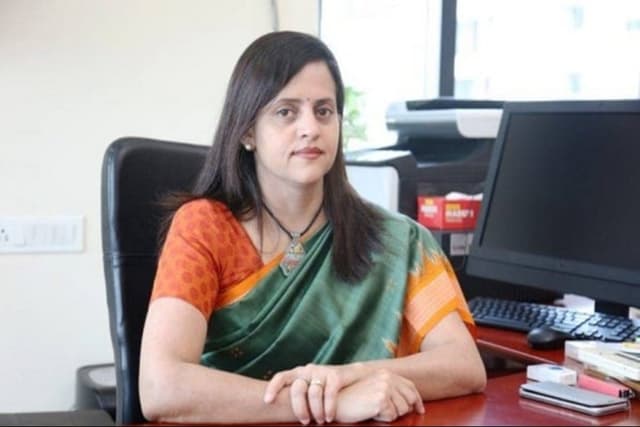
Mumbai must look beyond its growing metro network and start planning for a Regional Rapid Transit System (RRTS) to meet future travel demand, Mumbai Metro Rail Corporation (MMRCL) Managing Director, Ashwini Bhide said while appearing on the YouTube podcast Powertrain by Aakash Bhavsar.
She explained that a high-speed regional network would offer far more direct and faster connectivity, particularly for workers commuting from emerging industrial zones around the Mumbai Metropolitan Region.
Bhide noted that RRTS systems are designed for speed, with stations placed far apart compared to suburban or metro lines. This wider spacing, often 8 km or more, avoids frequent halts and allows trains to maintain higher speeds.
“That gives speed and the right kind of connectivity,” she said, highlighting that such a system would help Mumbai keep pace with rising commuter volumes.
Bhide emphasised that Pune needs an RRTS even more urgently than Mumbai, noting the city’s rapid growth and heavy commuter traffic between emerging industrial hubs.
She said the state is already considering a feasibility study, backed by inputs from Maharashtra Metro, as Pune’s expanding workforce requires faster, more direct regional connectivity beyond the metro network.
Pointing to the Delhi–Meerut RRTS, where trains touch 180 kmph, Bhide stressed the importance of introducing long-term planning for RRTS in Mumbai.
She observed that several industrial clusters around Mumbai draw thousands of daily commuters who rely on a mix of driving, suburban trains and last-mile links. An RRTS route with limited stops, she said, would significantly cut travel times.
“If we can identify such pocket where the bulk of travel is happening from one place to another, where you don't need to give connectivity at every location. A very limited number of stations in between, then travel could be very fast.”
Bhide added that industrial growth is increasingly occurring outside Mumbai’s saturated urban core.
“In Mumbai, there is no space for industry, however, many frontier tech industries need to be around the city,” she said. Citing Palghar, which is expected to expand rapidly with the upcoming Vadhavan Port, she noted that these zones will require stronger transport links.
“The area around Vadhavan in Palghar is going to get a boost… and such areas need direct connectivity from Mumbai which is much faster than suburban rails and metro,” she said.
Please click here to add Swarajya as your preferred and trusted news source on Google
Arjun Brij is an Editorial Associate at Swarajya. He tweets at @arjun_brij
 Join our