Announcements
Western Ghats Lit Fest 4th Edition: Underscoring National Security With Cultural Continuity
Swarajya Staff
Nov 19, 2025, 03:46 PM | Updated 03:47 PM IST
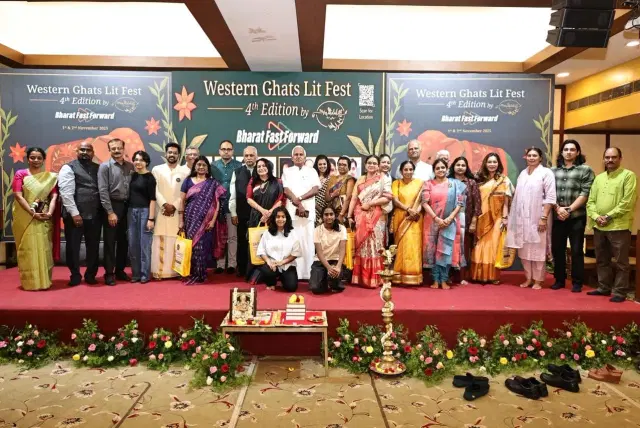
The Western Ghats Lit Fest (WGLF) 2025 concluded its Fourth Edition with a clear and deliberate emphasis on national security, civilisational continuity, and cultural clarity in a rapidly shifting global environment.
Organised by The Verandah Club and curated by Shefali Vaidya, Director of The Verandah Club, it brought together military veterans, authors, scholars, policy thinkers, and cultural practitioners, offering a platform for informed discussions rooted in national interest and civilisational self-assurance.
The festival’s central theme, Bharat Fast Forward, framed conversations on the future of India through the lens of history, strategy, culture, and identity. Rather than adopting an apologetic tone about India’s civilisational ethos, speakers stressed intellectual assertiveness, cultural rootedness, and strategic clarity as essential qualities for an emerging global power.

Military Voices Set a Strategic Tone
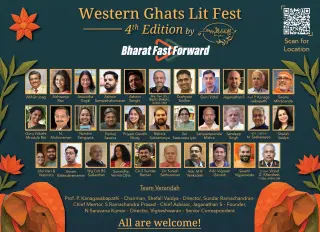
The festival opened and closed key sessions with senior military voices whose experience provided a grounded and real-world understanding of national security challenges. These interventions placed security and sovereignty at the forefront of the discourse.
Retired officers, including Lt Gen Vinod G. Khandare and Maj Gen (Dr) Bipin Bakshi, brought strategic candour to conversations traditionally dominated by academic or cultural perspectives. Their articulated positions were unified in one respect: India’s civilisational rise requires strategic preparedness, self-belief, and geopolitical astuteness.
Lt Gen Vinod G. Khandare’s keynote, Operation Sindhoor: Defending Dharma, explained how national security does not stand isolated from cultural and civilisational security. He spoke on integrated approaches to defence, highlighting that protecting territory, traditions, and social harmony requires both capability and clarity of purpose.
Maj Gen (Dr) Bipin Bakshi’s address on Cold Start to Dynamic Response: India’s New Normal examined India’s evolving military posture. He emphasised that a confident nation must deter aggression and anticipate emerging challenges. With increasing geopolitical realignments, he argued that India’s security thinking must remain proactive, calibrated, and rooted in national interest rather than external validation.
These sessions set the foundation for a festival that treated culture and security not as separate concerns but as interdependent pillars of statecraft.

Civilisational Identity and Cultural Confidence
Indian civilisational thought, heritage, and intellectual traditions were explored without defensiveness, placing emphasis on continuity, pride, and contextual intelligence.
Scholar Dushyant Sridhar’s talk, The Eternal Echo of Epics, addressed how Indian epics continue to inform human values, leadership models, and ethical frameworks. Drawing from classical literature and commentaries, he explained how epics shape not sentimental attachments but practical understanding of complex human conduct.
Panels featuring Sampadananda Mishra, Pankaj Saxena, and Sumedha Verma Ojha discussed Swayambodha and Shatrubodha, translated as Knowing Self and Knowing Others. The conversation placed equal stress on introspection and situational awareness, asserting that an informed civilisation understands not only its strengths but also its adversaries and challenges. This framing aligned seamlessly with the prevailing geopolitical discourse. India does not require external endorsement for its civilisational standing; it must instead develop clarity and confidence in narrating its own story.
Strategic Culture and the Art of Statecraft
Economics, politics, and statecraft featured prominently across the agenda. Sessions with M. R. Venkatesh and other policy analysts examined the long-standing but often overlooked traditions of strategic thought rooted in Indian civilisation, extending beyond conventional geopolitics to cultural and economic sovereignty.
Panels on temple traditions, economic pathways for Viksit Bharat, the role of women in civilisational continuity, and the socio-cultural challenges of the digital age provided a layered understanding of nation-building. Contributors stressed that assertive cultural identity and long-term policy thinking go hand in hand.
Discussion points included:
Civilisational economics and sustainable prosperity
Cultural institutions as anchors of social stability
Media narratives and the political economy of outrage
Role of Dharma in personal, social, and national life
Defence of indigenous practices in modern frameworks
This intellectual positioning was not insular. Speakers acknowledged global interdependence while maintaining that India must participate in the world as a confident civilisational state, not as a diluted copy of external models.
Literature, Imagination and Public Discourse
Prominent authors such as Ashwin Sanghi and Priyam Gandhi Mody contributed literary and political perspectives. Mody’s keynote, No Congress, No Nonsense, traced contemporary political transformations and debates around narrative battles in democratic space. Ashwin Sanghi examined India’s enduring fascination with myths and stories, arguing that literary traditions continue to shape social imagination and public reasoning. Rather than dismissing mythology as archaic, the discussion positioned storytelling as a tool of civilisational transmission and cultural continuity.
Book launches during the festival included The Hindu Manifesto by Swami Vigyananda, works on the Pallavas, civilisational revival, war experience, and strategic doctrines, reflecting a growing publishing ecosystem centred on India’s historical identity and contemporary realities.
Debut author Jaganathan S., also founder of The Verandah Club, launched his book Operation Phoenix: Bharat Protocol, a Techno Dharmic Thriller, published by Subbu Books, which sold out within hours of its launch at the festival.
Cultural Presentations and Youth Focus
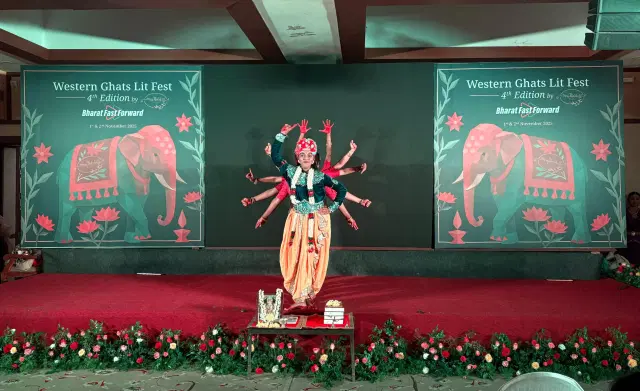
Cultural programming complemented discussions through performances of classical arts and demonstrations of yoga-based gymnastics. These sequences highlighted the festival’s approach, which brought together scholarship and strategy with heritage and physical discipline. A session dedicated to youth and Dharma emphasised the responsibility of the younger generation to uphold values while navigating rapid technological and social shifts.
Awards and Institutional Presence
The valedictory ceremony was marked by the first edition of the Verandah Smart Awards that celebrated contributors advancing scholarship, civic thought, and cultural initiatives. The gathering for the awards reflected strong participation from academicians, policy observers, authors, and thought leaders, reinforcing the festival’s standing as a meeting point for intellectual and cultural reflection.
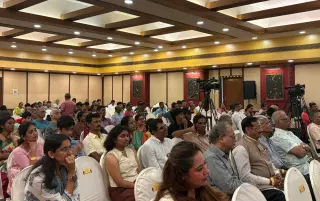
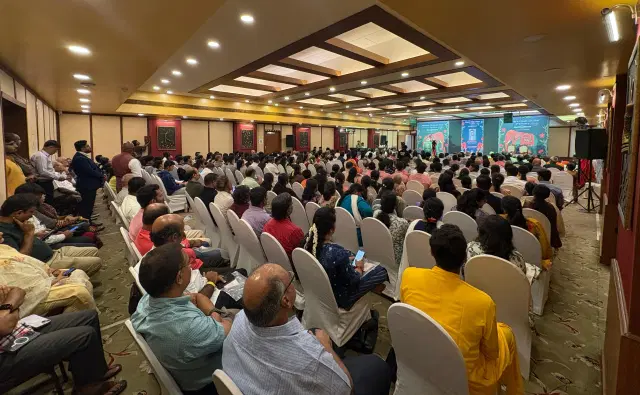
With the fourth edition turning out to be a swell event with over 1,500 participants attending both days, Western Ghats Lit Fest has truly established itself as a marquee celebration of words, wisdom, and heritage. Team Verandah has once again proved that execution with attention to detail, timekeeping, and hospitality infused with the soul of Kovai for all attendees has ensured that there is already huge anticipation for the fifth edition on 24 and 25 October 2026.
 Join our