States
Who Gets To Define Bengali Identity?
Dhritiman Mitra
Mar 16, 2026, 02:41 PM | Updated 02:44 PM IST
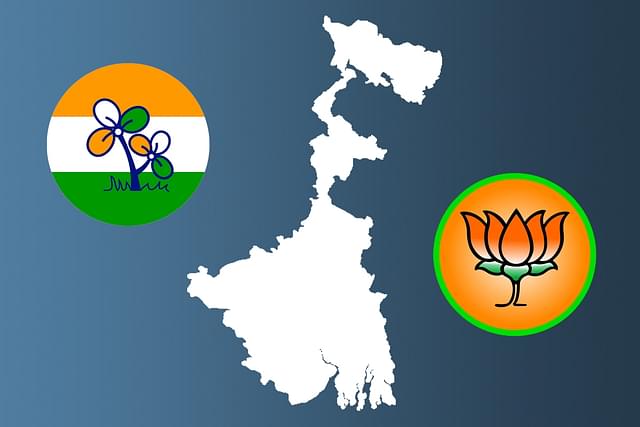
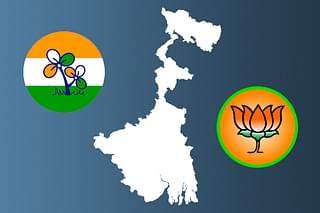
A few days ago, TMC MP Mahua Moitra stood at a protest rally in Kolkata with Mamata Banerjee seated behind her-and said: “You cannot be a Bengali if you don’t support TMC. Those who don’t support TMC have no right to identify as a Bengali.”
Let that sink in.
A party founded in 1998-barely twenty-eight years old-now presumes to issue certificates of Bengali identity. A party that did not even exist when Bengal was producing doyens of India’s Hindu and right-of-centre intellectual tradition - Bankim Chandra Chatterjee, Swami Vivekananda, Sri Aurobindo, and Dr. Syama Prasad Mookerjee - now presumes to declare that the 38–40% of Bengal’s electorate that votes for the BJP is somehow not Bengali enough. The arrogance is staggering. The historical illiteracy is even worse.
This statement was not a slip. It was said on a public stage, in the presence of the party’s supreme leader. No one flinched. No one corrected her. Which means it was sanctioned.
So let’s take the statement seriously. Let’s examine what it actually claims, who it excludes, and what it reveals about the party making the claim.
First, the Arithmetic of Arrogance
In the 2024 Lok Sabha elections, TMC got roughly 46% of the vote in West Bengal. The BJP got about 38–39%. In 2019, the BJP had touched 40.25%-winning 18 of 42 seats. More than half of Bengal’s electorate does not vote for TMC.
By Moitra’s definition, the majority of Bengalis are not Bengali.
The Matua community of Bangaon - whose ancestors arrived as refugees from East Bengal and who have consistently supported the BJP - are they not Bengali? The tribal voters of Jangalmahal, who swung decisively towards the BJP in 2019 - are they outsiders? And what of the millions of Hindu families who vote for the BJP because they see in it a beacon of hope against the current regime’s relentless minority appeasement?
Now, the History She Didn’t Read
The TMC was founded in 1998 as a Congress splinter - just Twenty-eight years old now. That’s younger than most of the people that will vote in the upcoming assembly elections.
The BJP’s direct predecessor-the Bharatiya Jana Sangh-was founded on October 21, 1951 by Dr. Syama Prasad Mookerjee of Calcutta - A quintessential Bengali, Son of Sir Ashutosh Mookerjee, Youngest Vice-Chancellor of Calcutta University and India’s first Industry Minister.
The party Moitra wants to expel from Bengal was founded by one of Bengal’s greatest sons. Let that irony breathe.
But the lineage goes deeper. The RSS, founded in 1925, was directly shaped by Bengal. Its founder, Dr. K.B. Hedgewar, came to Calcutta as a medical student and joined the Anushilan Samiti-Bengal’s legendary revolutionary network. The cadre structure, the emphasis on physical and moral discipline-Hedgewar carried Bengal’s revolutionary DNA back to Nagpur and built the RSS on it.
The Anushilan Samiti itself was inspired by Bankim Chandra’s Anandamath-the novel that gave India Vande Mataram. Its members swore oaths on the Bhagavad Gita. Its intellectual fuel came from Vivekananda and Sri Aurobindo. Khudiram Bose. Prafulla Chaki. Bagha Jatin - young Bengalis who laid down their lives for nationalism - a sentiment that TMC leaders today appear particularly uncomfortable with.
And here’s the detail that should end every argument about Bengal and Hindutva: the very word Hindutva was coined by a Bengali. Chandranath Basu-born in 1844 in Hooghly, a disciple of Bankim Chandra, a Presidency College graduate-published Hindutva: Hindur Prakrita Itihas in 1892. That’s thirty-one years before Savarkar wrote his famous essay. When Basu was defining Hindutva as the civilisational essence of Hindu identity, Savarkar was nine years old. The term the TMC reviles as an alien imposition on Bengal was literally invented in Bengal, by a Bengali, in Bengali.
So here’s what Moitra doesn’t understand, or pretends not to: Bengal is the cradle of India’s right-of-centre politics. Not a recipient. Not a convert. The originator. Vande Mataram is Bengali. Hindutva is a Bengali word. Vivekananda’s muscular Hinduism is Bengali. The Swadeshi Movement was launched from Calcutta’s Town Hall in 1905. Sri Aurobindo’s revolutionary nationalism was forged in Bengal.
What Mahua Moitra’s Statement Really Tells You
A confident ruling party doesn’t need to question its opposition’s right to exist. It doesn’t need to tell voters that their identity card expires if they press the other button in the booth. These are the reflexes of a regime that senses the ground shifting.
And the ground is shifting. From a vote share of 6% in 2009, the BJP in Bengal has grown to a 38–40% force in barely fifteen years. It is now the principal opposition-a position the Left held for decades and the Congress before them. TMC’s response to this is not policy. It’s not governance. It’s cultural gatekeeping: vote for us, or you’re not one of us.
This playbook has a name. When you tell a citizen that their cultural identity depends on political loyalty, you are not running a democracy. You are running a protection racket.
My Answer
I am a Bengali. I vote BJP. My political tradition in this state is older than the TMC, older than TMC’s founder’s political career, older than Indian independence itself. It runs from Bankim through Vivekananda through the Anushilan Samiti through Syama Prasad Mookerjee through the Jana Sangh and into the Bharatiya Janata Party that I support today. It is an unbroken civilisational thread that predates Moitra’s party by a century.
The TMC did not create Bengali identity - it just borrowed it. It appropriated Joy Bangla-a Bangladeshi slogan-and wrapped it in party colours. It did not produce a single Bankim, a single Vivekananda, a single Mookerjee. It merely occupied a seat and assumed it owned the building. Bengal does not belong to the TMC. The TMC, at best, is a temporary tenant in Bengal’s millennia-old civilisational home.
And tenants should be careful about claiming they own the house. And, the lease is up for review soon enough.
The author is Member, National Team, Policy and Research Division, BJP Yuva Morcha. Twitter Handle: @dhritiman_mitra. Views expressed are the author's own.
Dhritiman Mitra is a member of the National Team at Policy and Research Division, BJP Yuva Morcha.
 Join our