Commentary
The Future of Hindutva: Paths, Pressures, and Possibilities
Banuchandar Nagarajan
Feb 02, 2026, 09:38 PM | Updated 09:37 PM IST
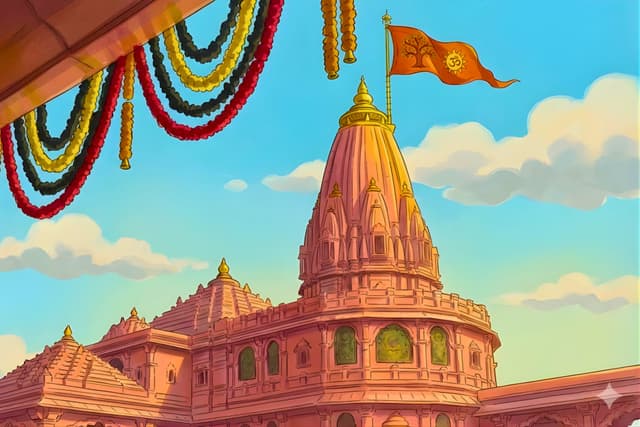
In the tapestry of India's evolving identity, Hindutva stands as a potent thread, weaving together cultural revival, political assertion, and national pride. Coined by Shri VD Savarkar in the early 20th century, Hindutva transcends mere religious Hinduism to encompass a civilisational ethos rooted in India's ancient heritage.
As we stand in February 2026, past the second anniversary of the grand Ram Temple in Ayodhya symbolizing a reclaimed glory and with the Bharatiya Janata Party having secured consecutive electoral triumphs, the question looms: What is the future of Hindutva?
Will it settle into a triumphant stasis, evolve as an endless process, or march toward a full reclamation of Hindu Rashtra? The trajectory is not predestined but shaped by demography, minority dynamics, economic ascent, and global currents. This column argues that while moderation may appeal to some, the momentum leans toward a bolder assertion of Hindu primacy in a way that could redefine secularism without unraveling pluralism.
Path 1: Mission Accomplished – Consolidation and Cohesion
The first path envisions Hindutva as a mission accomplished (almost) - a psychological victory that now pivots to consolidation and cohesion. The BJP's decade-plus dominance has not merely preached Hindutva but practiced it through policies that resonate with Hindu sentiments, from cultural preservation to assertive governance. The pinnacle was the 2024 inauguration of the Ram Temple, a symbol of rectified historical injustices after centuries of contention in a Hindu majority country.
For proponents of this view, often veterans of the Ram Mandir movement, the major battles are won. The focus shifts to healing divisions and dissipating the "bad vibes" from past agitations. This sentiment echoes in RSS chief Mohan Bhagwat's measured words: no need to unearth a Shivling beneath every mosque. Disputes over Kashi and Mathura, he suggested, should remain legal affairs, not flashpoints for mass mobilization.
This path appeals to the "old timers" who endured decades of struggle and now seek a stable equilibrium. It posits Hindutva as a nearly fulfilled ideology for which the heavy hitting done and the platform is laid. It chooses a path that integrates into India's democratic fabric without perpetual conflict, allowing the nation to channel energies into all-round development and unity.
Path 2: The Endless Process – Perpetual Negotiation in a Plural Society
Yet, in a nation as vast and variegated as India, such closure may be illusory. The second path frames Hindutva as an ongoing process, a perpetual negotiation in a multicultural democracy with millennia of layered history. Battles for and against Hindutva will ebb and flow, localized to specific issues - be it temple reclamations, cultural curricula, or social reforms. There is no endpoint; it's the natural rhythm of a plural society where narratives clash and counter-narratives emerge.
In this view, Hindutva advocates will remain vigilant, countering secularist or minority pushbacks without escalating to systemic overhauls. Democracy's fractious nature, amplified by social media and AI-driven echo chambers, ensures that identities remain fluid and contested. This path acknowledges India's diversity as an asset, not a hindrance, suggesting that Hindutva can thrive through adaptive engagement rather than dominance. It is a pragmatic stance, recognizing that in a land of soon-to-be 1.5 billion souls, absolute victories are rare, and the art lies in managing the churn.
Path 3: Reclaiming History – Toward a Hindu Rashtra
The third path is more ambitious: Hindutva as a long arc toward reclaiming history and establishing a Hindu Rashtra. Here, electoral wins and the Ayodhya triumph are mere first steps in a broader cultural renaissance. Battles must extend to all spheres - laws, education, media, arts - to "Hinduise" society fully. The Hindu character should permeate the Constitution, laws, and state institutions, not to disenfranchise minorities but to affirm India's intrinsic ethos.
Proponents argue that India, as a Hindu-majority civilization, deserves a state that reflects its soul, much like how many nations embed their cultural majorities into governance without overt oppression. This vision dismisses accusations of mimicking a "Hindu Pakistan" by articulating a model where minorities retain basic rights, but Hindu practices and values take primacy. It's a bottom-up transformation, where piecemeal reforms like the Uniform Civil Code (UCC) or the Citizenship Amendment Act (CAA) build toward a cohesive Hindu-centric framework.
Critics may decry it as majoritarian overreach, but advocates see it as restorative justice after centuries of invasions and colonial dilutions.
Deciding Factors: Demography, Minorities, Economy, and Global Currents
Which path India treads will hinge on multifaceted forces, starting with demography. India remains overwhelmingly Hindu-majority, with Hindus comprising about 80% of the population. This numerical edge empowers shaping society in alignment with Hindu aspirations. However, narratives of faster minority population growth - particularly Muslims - stoke anxieties. If fertility differentials persist or migration patterns shift, it could fuel panic, pushing moderates toward the reclamation path. Caste-based divisions of the society are a hindrance towards a collective Hindu majority.
Equally pivotal are the minorities themselves. Unlike in many nations where minorities face systemic curbs, India's offer unfettered rights - from religious freedoms to affirmative actions. Yet, some minority groups, egged on by vested political interests, push for expansions that confront majority sentiments. A recent example is Thiruparankundram case. History teaches that small, assertive groups often drive change - sometimes beneficial, sometimes divisive. If minorities overreach, courting power through confrontation rather than coexistence, it risks alienating the majority and accelerating the shift toward a Hindu Rashtra.
India's global standing and economic surge will further mould Hindutva's future. As the soon-to-be world’s third-largest economy and India's confidence keeps swelling, a resurgent nation, shedding colonial hangovers, will naturally aim to reclaim cultural pride. Hindu symbols - from yoga's global export to Bollywood's soft power - multiply this sentiment.
Global Islam adds another layer. India observes warily as European capitals - citadels of Christianity for centuries - witness a near takeover of Islamist influences. The fear is of self-inflicted wounds: allowing similar assertions at home could erode secular harmony. This global backdrop reinforces the cautionary tale, nudging India toward safeguarding its Hindu core.
The Road Ahead: Tensions and Hope
Society, of course, is not stagnant; it turns with the tides of time. Thus, the first path of closure seems unlikely - options two and three loom over the horizon. Amid technological disruptions - AI, automation, climate shifts - primal identities endure as anchors
For secularists and minorities, the imperative is restraint: ensure agitations stay contained, avoiding provocations that agitate the majority. In a social media-fuelled era, where AI amplifies misinformation, this is a tall order. For Hindus, the long arc bends toward option three. If derided as regressive, they can reframe Hindu Rashtra as inclusive: minorities thrive, but society is directed by Hindu ethos.
In this tension lies India's forward march. Hindutva's future isn't zero-sum; it could evolve into a pluralism where Hindu primacy coexists with minority rights. But if provocations mount, the reclamation path may accelerate, reshaping the republic sooner than what many may estimate.
The stakes are India's soul - vibrant, contested, eternal.
Banuchandar is a political and public policy advisor. He posts at @Banu4Bharat.
 Join our