Culture
Chasing Michelin Stars: Why Indian Cuisine Has Failed To Conquer The World
Adithi Gurkar
Jan 14, 2026, 07:00 AM | Updated Feb 24, 2026, 11:09 AM IST
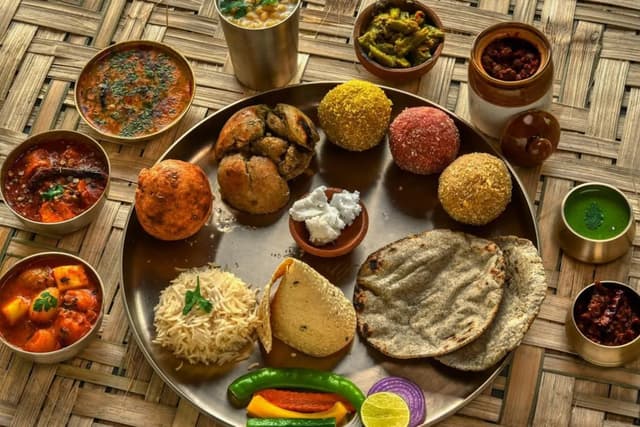
Everyone agrees Indian food is spectacular. From Hyderabad's fragrant biryanis to Kerala's coconut-laced curries, from Mumbai's street-side vada pav to Bengal's intricate fish preparations, Indian cuisine commands universal affection. Yet for all this culinary brilliance, Indian food remains conspicuously absent from the upper echelons of global gastronomy.
While Japanese, French, and Italian cuisines dominate Michelin guides and shape international fine dining, Indian food occupies an ambiguous space: beloved but rarely celebrated, popular but seldom prestigious.
The real culprit is not Western bias or lack of culinary excellence. It is India's systematic failure to build the institutional frameworks that would make global dominance inevitable. While we celebrate individual chef successes and debate Michelin stars on social media, the fundamental infrastructure required for culinary diplomacy simply does not exist.
Defining the Undefinable: What Is Indian Food?
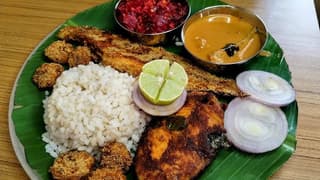
Before addressing India's institutional failures, we must confront a fundamental challenge: what actually constitutes Indian food? No other country commands such an extraordinary range of flavours, techniques, and traditions within its borders. Each of India's twenty-eight states possesses its own distinct cuisine, not merely variations on a theme, but genuinely unique culinary systems shaped by local geography, climate, agriculture, and cultural history.
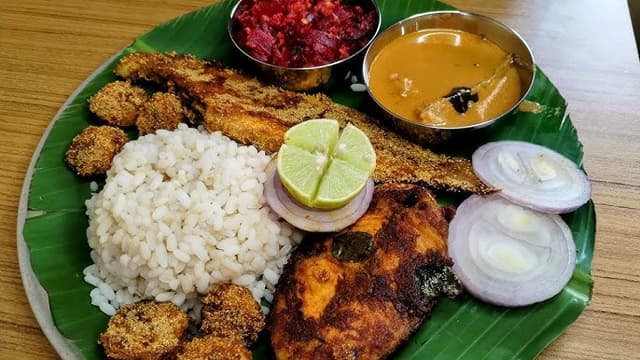
Kerala's coconut-rich curries bear little resemblance to Rajasthan's water-scarce preparations. The mustard oil and freshwater fish of Bengal operate in an entirely different flavour universe from Tamil Nadu's tamarind-forward vegetarian cooking. Kashmiri wazwan shares almost no common ground with Chhattisgarh's tribal cuisine. Even within states, geographical variation produces radical culinary differences: coastal Karnataka's seafood traditions diverge completely from its northern districts' jowar-based cuisine.
The diversity extends even further.
Each district within each state possesses its own culinary specialities shaped by microclimates, local agriculture, and community traditions. Telangana's Hyderabadi biryani differs from the Nizamabad region's rural preparations; within Kerala, Malabar's Mappila cuisine contrasts sharply with Travancore's Syrian Christian cooking. This district-level diversity means India contains not twenty-eight state cuisines, but hundreds of distinct culinary micro-traditions, each worthy of recognition and preservation.
This is not the regional variation found in other large countries, slight adjustments in spicing or preferred proteins. This is fundamental culinary diversity. The range of flavours alone exceeds what most nations produce in their entirety: from Himachal's subtle, warming spices to Andhra's volcanic heat, from Goa's Portuguese-influenced sourness to Gujarat's sweet-savoury balance. Indian cuisine does not occupy a single position on the global flavour spectrum; it occupies nearly the entire spectrum simultaneously.
This extraordinary diversity is simultaneously Indian cuisine's greatest strength and its most devastating weakness.
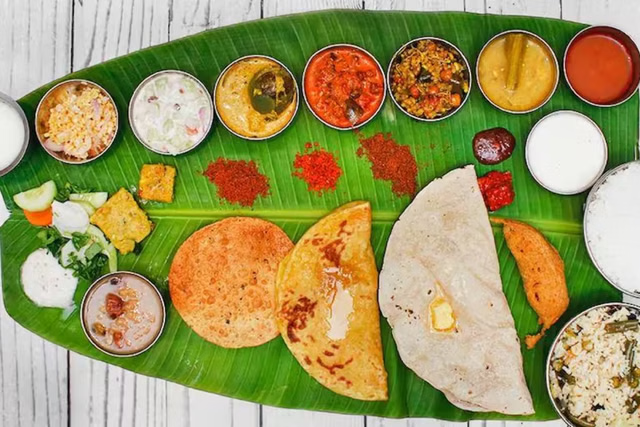
The Systemisation Problem: Blessing or Curse?
Compare this to cuisines that have achieved global systematisation. Japanese food, for international audiences, essentially means sushi, ramen, tempura, and perhaps a few other categories. Italian cuisine translates to pasta, pizza, and risotto with recognisable regional variations. These simplifications are not accidents. They are the result of deliberate cultural export strategies that identified core "ambassador dishes" capable of representing entire culinary traditions.
Indian cuisine lacks this unified framework entirely. Walk into an Indian restaurant abroad and you will find a confused amalgamation: Punjabi tandoori sitting beside South Indian dosas, with Bengali sweets and Goan vindaloo thrown in for good measure. This is not a restaurant menu. It is a culinary atlas attempting to represent a billion people and dozens of distinct food cultures under one roof. The result is confusion rather than clarity, overwhelming rather than inviting.
Other Asian nations solved this through systematic intervention decades ago. Thailand launched a coordinated "Global Thai" programme in the early 2000s, training chefs, standardising dishes, and funding restaurant openings worldwide. South Korea invested heavily in kimchi diplomacy, creating global markets and UNESCO recognition for their culinary heritage. Japan pursued washoku's UNESCO inscription with national resources and strategic focus. India has pursued no comparable strategy, leaving its culinary diplomacy to chance and individual enterprise.
The absence of standardisation extends beyond branding to technique transmission. French culinary schools teach precise methodologies: mise en place, mother sauces, knife skills. Japanese ramen academies drill students in broth preparation and noodle texture. Indian culinary education remains fragmented, with regional techniques passing through family lineage or haphazard apprenticeship, rarely codified into teachable systems that could scale internationally.
India's institutes of hotel management compound this problem catastrophically by focusing overwhelmingly on Western cuisine and hospitality models. Walk into most IHM curricula and you will find extensive training in French techniques, continental cooking, and international service standards. These are skills necessary for working in Western-style hotels, but utterly irrelevant to preserving and elevating Indian culinary traditions.
Where are the specialised courses in regional Indian cooking? Where are the degree programmes dedicated to mastering Chettinad spicing or Kashmiri wazwan techniques or Northeastern fermentation methods?
This educational gap has devastating consequences. Chefs trained in Indian institutes often know French mother sauces better than they know regional Indian masalas. They can plate a perfect beef Wellington but struggle to articulate the technique behind their grandmother's dosa batter. The institutions that should be systematising and transmitting Indian culinary knowledge are instead training students to serve Western tastes.


The Michelin Trap: Seeking Western Validation
Few phenomena reveal Indian cuisine's institutional weakness more starkly than the pursuit of Michelin stars. These coveted markers of culinary excellence, created by a French tyre company to encourage driving tourism, have become the ultimate arbiters of gastronomic legitimacy. For Indian restaurants, particularly those abroad, Michelin recognition represents validation that Indian food belongs in the same conversation as French haute cuisine.
The successes are real but isolated. Semma in New York earned its star serving South Indian food, before a viral TikTok incident exposed the racism lurking beneath polite foodie culture, with commenters dismissing Indian cuisine as "dodo smelly, spicy." Vikas Khanna's Bungalow in New York received acclaim for elevating Indian techniques. In London, Dishoom achieved significant success partly through Michelin recognition.
These victories matter, but they expose an uncomfortable truth: Indian cuisine relies on Western institutions for validation rather than building its own standards of excellence. The Michelin system itself carries inherent biases. Its criteria evolved from European fine dining traditions with emphasis on French technique, formal service, specific plating aesthetics, wine pairings. Indian cuisine, with its thali-based service, hand-eating traditions, and fundamentally different flavour architectures, must contort itself to fit foreign expectations.
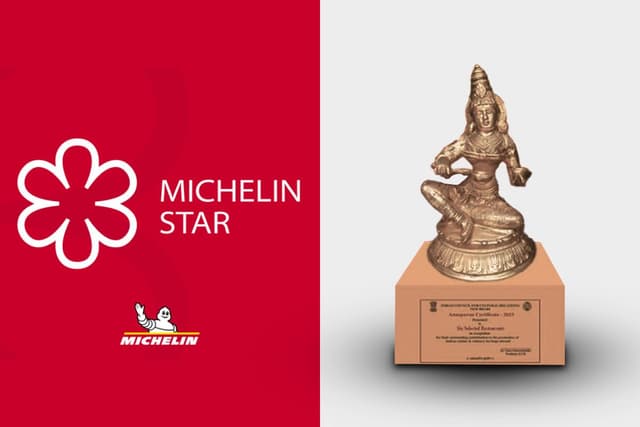
This is precisely why the Annapurna Certificate programme, launched by the Indian Council of Cultural Relations (ICCR) as India's answer to Michelin, should matter, yet fails so spectacularly. On paper, it's elegant: certify authentic Indian restaurants abroad with a statue of Goddess Annapurna and formal recognition, building India's own standard rather than begging for Western validation.
In practice, it's a masterclass in wasted potential. Of the six restaurants awarded in 2023, all served predominantly North Indian cuisine (Punjabi and Mughlai), perpetuating the exact stereotypes that reduce Indian food to "curry" in global imagination. Only one winner, Balaji Dosai, even bothered promoting the award on social media; the others ignored it entirely, an unthinkable response to a Michelin star.
The ICCR website lists winners without locations or contact details, the award ceremony generated zero buzz, and the programme has built no brand recognition whatsoever. Without ownership requirements, it can't even guarantee authenticity. Pakistani and Bangladeshi restaurants market themselves as "Indian" from London to New York, and the certificate does nothing to address this.
India has created its own culinary certification system and then refused to invest in making it matter, leaving Indian cuisine still dependent on French tyre company standards for legitimacy. The endeavour to promote Indian food abroad need not be just a government endeavour but a whole-of-nation initiative, requiring coordination between government bodies, entrepreneurs, industry associations, culinary institutes, private sector investors, and diaspora communities working together towards a unified vision.
This validation paradox extends to another revealing phenomenon: when non-Indians open Indian restaurants, they often gain immediate legitimacy and "authenticity" that Indian operators struggle to achieve.

The irony is stark: foreigners are building India's culinary infrastructure whilst Indians chase Western validation. South African David Belo's Naviluna was the first bean-to-bar chocolate house in India and the first in the world to use Indian-origin cacao exclusively, introducing local flavours like jamun and rosemary, Kerala single origin, and Tokai coffee with pineapple.
Australian Jane Mason and French Fabien Bontems founded Mason & Co in Auroville in 2014, creating organic vegan chocolate with flavours like orange, espresso, and chilli cinnamon. German Dina Weber's SAPA Sourdough & Pastry in Mysuru has secured the 48th spot at the prestigious Condé Nast Traveller x Zomato Top Restaurant Awards 2024, introducing European-style sourdough whilst reportedly incorporating traditional Indian sweets like Mysuru pak into her offerings.
These foreigners aren't just making products. They're creating entire market categories, introducing quality standards, establishing supply chains with local farmers, and educating Indian consumers about what artisanal food should taste like. They understand something Indian entrepreneurs often miss: India's ingredients are world-class, but the country lacks the institutional knowledge and standardisation frameworks to monetise them globally. Whilst Indian restaurateurs wait for Michelin's approval, these expats are quietly building the infrastructure that should have been India's own.
They bring systemisation: clear processes, consistent quality control, replicable methods. They bring branding: coherent visual identities, compelling narratives, strategic positioning. They bring storytelling: context that helps customers understand what they are experiencing and why it matters.




The Representation Problem: Flattening a Subcontinent
Ask most Westerners about Indian food and you will hear about butter chicken, naan, chicken tikka masala (a dish invented in Britain), and perhaps palak paneer. This narrow representation (essentially Punjabi and Mughlai cuisine filtered through British colonial experience) defines global perceptions of Indian food. It is as if Italian cuisine were represented solely by spaghetti and meatballs, or Chinese food reduced exclusively to American-style chow mein.
China, interestingly, has escaped this trap. Global audiences recognise Sichuan's fiery complexity, Cantonese dim sum, Hunan's bold flavours: distinct regional traditions with their own identities. Indian cuisine, vastly more diverse, remains flattened into a monolithic "curry" category.
The New Guard: Regional Cuisines Find Their Champions
Yet a counter-movement is emerging, led by passionate individuals determined to showcase India's staggering culinary diversity. Actress Lin Laishram launched Akhoi, Mumbai's first Manipuri cloud kitchen in Versova, after spending nearly two decades in the city without finding a single Manipuri restaurant. The menu reimagines classics for the Mumbai palate: Chak Hao (black rice) Bao buns, Bhoot Jholokia Glazed Wings, introducing the city to fermented fish, indigenous greens, and the umami depths of bamboo shoots and akhuni (fermented soybeans).
Chef M Jenny Clinta runs Sakare, an experiential dessert supper club in Bangalore that traces her journey from the Andaman and Nicobar Islands to rural France. Her Apple Tarte Tatin features locally-sourced cinnamon from the forests of Andamans, paired with jaggery white chocolate caramel and cinnamon vanilla bean ice cream, putting island ingredients on the culinary map through a cross-cultural lens.
Dr Darshan Gowda's Dakshin Soirée celebrates the traditional, regional heritage of South Indian cuisine, particularly from Karnataka, through immersive, community-style dining events featuring multi-course meals with specific regional themes like Malnad or Cauvery. These aren't permanent restaurants but carefully curated experiences focused on authentic recipes and storytelling: dishes like Pathrode, Hayagreeva, and Mavina Sasuve prepared using traditional techniques like steaming, slow cooking, and stone grinding.
Together, these ventures are doing what the Annapurna Certificate fails to accomplish: showcasing Naga cuisine's fierce chillies and smoking techniques, Coorgi food's distinctive flavours, Bengali fish preparations, and the coastal seafood traditions of Konkan. They're not waiting for institutional validation. They're building the infrastructure of recognition themselves, one supper club, one cloud kitchen, one experiential dining event at a time.
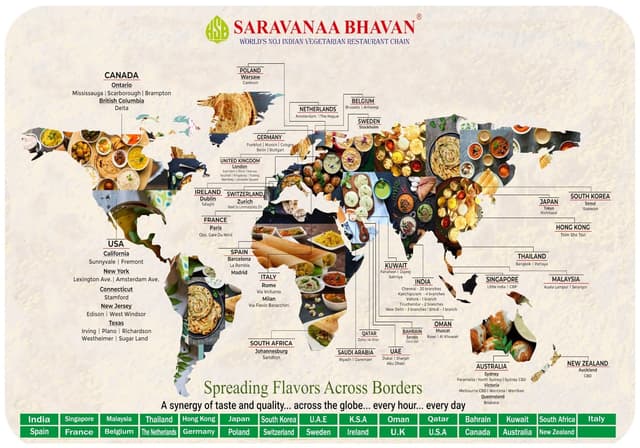
Even successful chains reveal the representation gap. Saravana Bhavan, with over 100 outlets in 28 countries, built a global empire serving South Indian vegetarian food, yet its reach remains largely confined to diaspora markets and major urban centres. MTR, despite decades of quality, has not achieved the ubiquity of Panda Express or Wagamama. India lacks a successful, scalable fast-casual chain model that could introduce diverse regional cuisines to mass markets. The absence of an Indian Chipotle or Sweetgreen is not about demand. It is about institutional failure to create replicable, scalable formats.




The Intellectual Property Crisis: Heritage Without Protection
Nothing illustrates Indian cuisine's structural vulnerability quite like its intellectual property chaos. In Mysore, multiple establishments call themselves "Mylari," each claiming to serve the original dosa recipe, diluting the brand into meaninglessness. In Delhi, two restaurants (Moti Mahal and Daryaganj) fought a bitter court battle over who invented butter chicken, a dispute so absurd it revealed the complete absence of functional IP frameworks for culinary heritage.
This is not about bragging rights. Intellectual property protection determines whether culinary traditions can build prestige and commercial value. Champagne is legally protected; only sparkling wine from that specific French region can use the name. Parmigiano-Reggiano cheese must meet strict production standards in designated Italian provinces. Neapolitan pizza has protected designation status. Japanese Wagyu has geographical indication and rigorous certification as does Scotch whisky.
Indian cuisine has virtually none of this. Family recipes can be stolen with impunity. Restaurant names and concepts are copied freely. Traditional dishes have no trademark protection. Geographical indications (legal designations that protect regional specialities) exist in Indian law but are rarely publicised, registered internationally and enforced for food products. Darjeeling tea has protection; Hyderabadi biryani does not. Mysore pak does not. Chettinad curry does not.
The consequences extend beyond individual restaurants to entire culinary traditions. Without IP protection, there is little incentive to innovate, standardise, or invest in building prestigious brands. Why develop a signature dish if competitors can replicate it tomorrow without consequence? Why invest in training and technique transmission if your methods will be copied by untrained imitators? Why build a restaurant brand if anyone can use your name?
Compare this to how other cuisines protect their heritage. Japanese authorities rigorously certify authentic sushi chefs. Italy guards its denominazione di origine controllata (DOC) designations zealously. France protects its culinary appellations through legal and cultural mechanisms backed by decades of institutional enforcement. These protections are not about snobbery. They are about maintaining quality standards, supporting artisanal producers, and ensuring that prestige translates to economic value.
Indian cuisine's IP chaos means its culinary heritage remains commons-ised, available to all, protected by none, and therefore unable to build the institutional prestige that commands premium prices and global respect.
Building Infrastructure: The Missing Supply Chains
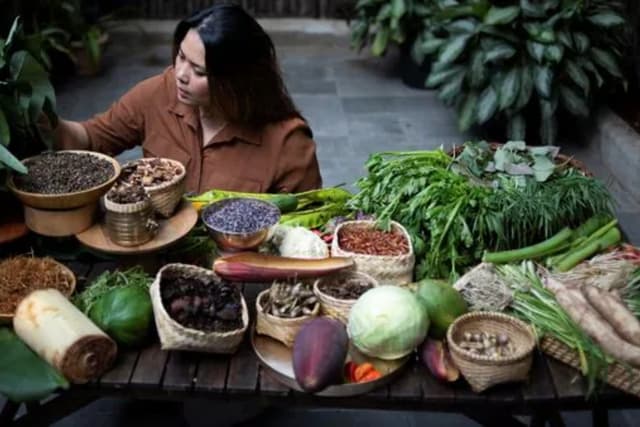
Beyond legal protections and training, Indian cuisine needs specialised ingredient systems and supply chains that can support quality at scale. Individual chefs have recognised this gap and attempted to address it. Sanjeev Kapoor built a food product empire, creating standardised spice blends and ingredients that home cooks and restaurants could rely on. Vikas Khanna has worked to source and promote authentic regional ingredients, connecting traditional producers with modern markets.
These efforts matter, but they remain individual initiatives rather than systemic infrastructure. Compare this to Italian cuisine's protected supply chains for San Marzano tomatoes, Parmigiano-Reggiano cheese, and extra virgin olive oil. Or Japanese cuisine's rigorous systems for grading rice, certifying sake, and ensuring seafood quality. These are not accidents. They are deliberately constructed networks backed by industry associations, government support, and legal frameworks that ensure consistency and authenticity.
Indian cuisine needs similar systems: reliable supply chains for specific varieties of rice, certification standards for spice quality, cold chain infrastructure for regional vegetables and seafood, connections between artisanal producers and restaurants. When a chef in London or New York wants to cook authentic Coorgi pandi curry, can they source genuine Coorgi spices? When Manipuri cuisine gains international attention, will restaurants abroad be able to access fermented bamboo shoots and indigenous greens?
Without these supply chains, Indian cuisine abroad will continue relying on generic substitutes and approximations, undermining the very authenticity that should distinguish it. The infrastructure gap is not just logistical. It is institutional, requiring coordination between producers, distributors, certifiers, and restaurants that currently does not exist.
Beyond Government: A Whole-of-Nation Failure
Understanding Indian cuisine's challenges requires examining what actually succeeds. Domestically, certain formats have achieved near-universal appeal. Ramen-style dishes and Burmese noodles (budak) have found enthusiastic audiences across Indian cities: simple, accessible, flavourful foods that do not require extensive cultural explanation or acquired tastes.
That last point reveals a devastating asymmetry. MasterChef Australia enjoys significant popularity in India. Indians avidly watch Western chefs compete using Western techniques. The reverse barely exists. Indian cooking shows rarely capture international audiences, and when they do, it is often through diaspora channels rather than mainstream viewership. This one-way cultural flow reflects and reinforces the validation dynamic: Indians seeking to learn from the West, whilst the West remains largely incurious about Indian culinary technique.
India has no equivalent to France's Fédération de la Haute Couture et de la Mode, which provides services to members whilst representing them before public authorities. No equivalent to the Comité Interprofessionnel du Vin de Champagne, which actively polices misuse worldwide. No equivalent to the Scotch Whisky Association, which aggressively pursues legal action against brands misusing protected names.
Instead, India limps along with scattered organisations operating in complete isolation. The Fashion Design Council of India (FDCI) has no authority in international IP matters. Various export promotion councils prioritise trade volumes but lack enforcement mandates. Bodies focused on manufacturing offer limited protection for intellectual property. The Textiles Committee operates in silos with no clear overlap or legal authority to defend India's identities domestically, let alone abroad.
This fragmented approach is not limited to fashion. It perfectly mirrors Indian cuisine's institutional landscape. No coordinated body exists to set standards, pursue international protections, coordinate marketing, or transform traditional products into modern luxury brands without losing their authentic character.
Movement Matters: Mobility as Culinary Diplomacy
Culinary diplomacy ultimately depends on people: chefs, restaurateurs, entrepreneurs who can travel, train, and establish ventures in foreign markets. Yet India's chefs face significant mobility barriers that complicate international expansion. The question is stark: how easy is it for an Indian chef to relocate to Australia, the UK, or the US to open a restaurant or work in an established kitchen?
The answer varies dramatically by destination. India and Australia have established arrangements facilitating chef mobility (Australia Economic Cooperation and Trade Agreement, ECTA), recognising culinary expertise as valuable skilled migration. Other countries remain more restrictive, with visa categories poorly suited to restaurant work or temporary culinary assignments.
Beyond formal immigration barriers lie non-tariff obstacles: qualification recognition (Indian culinary diplomas often unrecognised versus Le Cordon Bleu certificates), hygiene certification standards (FSSAI certifications not automatically accepted in countries requiring ServSafe or HACCP), and food safety credentials that may not translate across borders (Western temperature protocols designed for European cooking, not slow-cooked curries or tandoor methods).
A chef trained in traditional Indian techniques may find their credentials unrecognised abroad, forced to obtain Western culinary certifications despite years of expertise. Traditional apprenticeships under master chefs (learning wazwan from a Kashmiri ustad or dosa-making from a South Indian expert) may not count as "formal training" by Western licensing authorities.
Health and safety standards developed for European kitchens may not accommodate Indian cooking methods: tandoor ovens face regulatory challenges, specialised ventilation systems are required for spice-heavy cooking, and traditional techniques like fermenting idli batter or ageing yoghurt at room temperature may conflict with local health codes. Even importing specific ingredients (curry leaves, particular rice varieties, certain spices) faces phytosanitary restrictions.
These bureaucratic frictions do not prevent Indian cuisine from spreading, but they make it unnecessarily difficult, favouring Western-trained chefs over traditionally skilled practitioners.
Addressing these barriers requires diplomatic engagement beyond cultural promotion: actual bilateral agreements on qualification recognition, streamlined visa categories for culinary professionals, and regulatory harmonisation that accommodates diverse cooking traditions rather than forcing conformity to Western standards. Without these frameworks, Indian chefs operate at systematic disadvantages compared to their European and East Asian counterparts.
Culinary Diplomacy: Learning from Success
Food functions as soft power, a concept well understood by diplomats and strategists, even if India's culinary sector has failed to grasp it. Girija Madhavan's writings on culinary diplomacy demonstrate how food creates cultural bridges, shapes national perceptions, and generates economic value. When done strategically, culinary diplomacy builds export markets, supports tourism, and elevates national prestige.
Thailand's government understood this when it launched coordinated efforts to standardise Thai cuisine, train chefs internationally, and fund restaurant openings in strategic markets. The goal was not just selling pad thai. It was positioning Thailand as a sophisticated culinary destination, driving tourism and creating demand for Thai products globally.
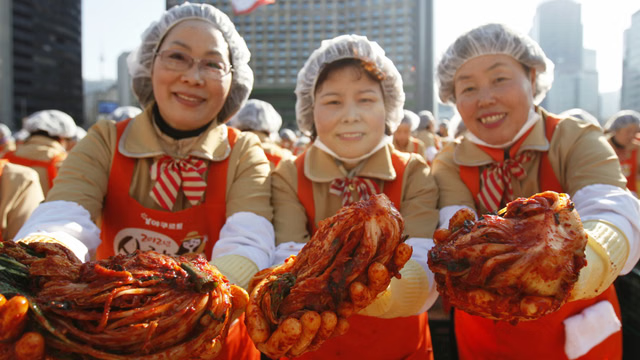
South Korea's kimchi diplomacy similarly combined cultural promotion with commercial strategy. Government support helped kimchi achieve UNESCO heritage status, funded research and development, and promoted Korean cuisine through pop culture channels. The result: Korean food transformed from niche immigrant cuisine to trendy global phenomenon within two decades.
Japan pursued washoku's UNESCO recognition with national resources, creating frameworks for technique transmission, supporting culinary schools, and strategically promoting Japanese cuisine as intangible cultural heritage. This was not spontaneous. It was planned, funded, and executed with diplomatic precision.
India has pursued no comparable strategy. There is no coordinated government initiative to promote Indian cuisine globally. Culinary institutes focus on domestic training rather than international technique transmission. No systematic effort identifies and supports restaurant ventures abroad. No diplomatic strategy leverages food as cultural soft power.
Yet promising initiatives are emerging at the state level. The Culinary Lounge, in association with the Government of Telangana and the non-profit Network of Indian Cultural Enterprises, is working towards creating a culinary tourism initiative: developing frameworks to document, preserve, and promote the state's culinary heritage, encouraging entrepreneurs to create businesses, whilst creating pathways for international recognition.
If successful and replicated across states, such state-level initiatives could collectively build the national infrastructure that has been missing, with each state championing its district-level culinary specialities on the global stage.
The Path Forward: Institutional Revolution, Not Individual Heroism
Indian cuisine's challenges are surmountable, but they require institutional revolution rather than hoping individual excellence eventually scales to collective success.
Embrace diversity strategically. Rather than presenting all Indian food as undifferentiated "curry," create clear regional schools with distinct identities: coastal cuisine, Himalayan traditions, Deccan specialities, Northeastern flavours. Let each region develop its own ambassador dishes and export strategies, similar to how Chinese regional cuisines maintain separate identities. This requires coordinated industry bodies, not government mandates.
Build IP protection with enforcement teeth. India needs more than GI registrations that exist only on paper. The country requires enforceable legal frameworks for culinary heritage backed by industry associations with actual authority. Geographical indications should be pursued aggressively for regional specialities with international treaty backing. Trademark protections for restaurant concepts and family recipes must be strengthened and enforced. Without legal consequences, Indian culinary brands will continue losing value to imitators.
Transform culinary education from Western mimicry to Indian expertise. Hotel management institutes must stop training students primarily in French techniques and continental cooking. Create specialised degree programmes in regional Indian cuisines. Develop curricula focused on technique transmission (not just recipe replication) that can be taught internationally. Establish certification programmes that maintain quality standards and give Indian chefs credentials recognised globally.
Build authentic supply chains with quality standards. Move beyond individual initiatives like Sanjeev Kapoor's product lines to create industry-wide systems. Establish certification standards for spice quality, cold chain infrastructure for regional ingredients, and connections between artisanal producers and restaurants that can scale internationally. When chefs abroad want authentic Coorgi spices or Manipuri ingredients, these should be reliably available through systematised supply chains, not impossible treasure hunts. There is a need to have research institutions like CFTRI and NIFTEM and others involved in food technology to research and innovate different flavours and formats.
Tell better stories with institutional backing. Every Indian dish carries history: migrations, trade routes, royal patronage, religious traditions, agricultural innovations. These narratives should not remain implicit; they should be actively marketed through coordinated campaigns, not left to individual restaurant owners. Develop cookbook series, documentary programmes, and digital content that positions Indian cuisine as sophisticated, diverse, and technically demanding, not just "spicy curry."
Stop seeking validation; start setting standards. The goal should not be earning more Michelin stars by conforming to European criteria. The goal should be building Indian culinary institutions that define excellence on their own terms, creating benchmarks, standards, and recognition systems that reflect Indian food's actual values and traditions. Establish an Indian equivalent to the Fédération de la Haute Couture et de la Mode or the Comité Interprofessionnel du Vin de Champagne with legal authority and enforcement capability.
Scale smartly with replicable formats. Learn from Saravana Bhavan's global reach, but think bigger and more diverse. Develop fast-casual formats that can introduce regional cuisines to mass markets. Create franchise models that maintain quality whilst enabling expansion. Build chains that showcase Indian food's breadth rather than its narrowest representations. This requires venture capital and private equity engagement with the restaurant sector, which has largely ignored Indian cuisine's commercial potential.
Ecosystem thinking: Enable culinary entrepreneurship with systematic support. The next generation of Indian culinary success will come from entrepreneurs willing to take risks in foreign markets, experiment with formats, and build brands that can scale. This requires support systems: access to capital, mentorship from successful restaurateurs, market intelligence about foreign dining scenes, and networks that connect aspiring entrepreneurs with established players. Unlocking capital, talent and entrepreneurial energy to create, across formats, Indian food ecosystems is important.
Negotiate bilateral mobility agreements. Work diplomatically to establish chef mobility frameworks similar to India's arrangement with Australia. Pursue qualification recognition agreements, streamlined visa categories for culinary professionals, and regulatory harmonisation that accommodates diverse cooking traditions. Indian chefs should not face systematic disadvantages compared to their European and East Asian counterparts.
It is imperative that as India grows and becomes Viksit, Indian cuisine, cooking traditions, recipes, ingredients, establish their rightful place on the global stage.
Adithi Gurkar is a staff writer at Swarajya. She is a lawyer with an interest in the intersection of law, politics, and public policy.
 Join our