Culture
Explained: How Fake Ghee Slipped Into Tirupati Devasthanam's Laddus For 5 Years
S Rajesh
Nov 24, 2025, 11:07 AM | Updated Dec 09, 2025, 10:29 AM IST
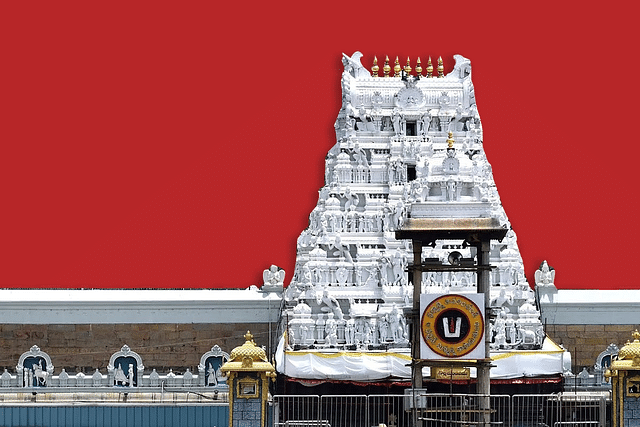
When Andhra Pradesh Chief Minister N Chandrababu Naidu claimed last year that the ghee used for Tirumala’s iconic laddu prasadam had been adulterated with animal fat, it sparked a nationwide uproar. Hindus across the world were stunned, struggling to understand how such a breach could occur.
The outrage quickly turned into a demand for accountability. How had such adulteration slipped past the TTD’s quality checks? Who had failed in their duty to safeguard the laddu’s sanctity? Accusations flew, with devotees accusing the Board of betraying the very faith it was meant to protect. Claims that the samples contained beef tallow and lard only intensified their anger.
Fingers were pointed at former chief minister Y S Jagan Mohan Reddy and his party for turning a blind eye to such adulteration. His being a Christian was also repeatedly pointed out during debates on the topic. Deputy Chief Minister Pawan Kalyan announced an eleven-day prayaschita fast and called for the formation of a national board for the protection of Sanatana Dharma.
Tempers cooled down a bit after it was found that the said samples were flagged and were not used in the preparation of laddus. Naidu’s government reverted to procuring ghee from Nandini, Karnataka’s state dairy cooperative. The Supreme Court later rebuked him, saying that it expected Gods to be kept away from politics.
While the issue slowly receded to the back of people’s minds as time passed by, question marks over the quality of laddus remained as devotees reported differences in taste and reduced shelf life.
Some even began to ask if the allegations were just a political gimmick and said that if it were so, Naidu and the Telugu Desam Party (TDP) should be taken to task for playing with the faith of crores of Hindus.
Just as these questions gained traction, the findings of a Special Investigation Team (SIT) appear to have vindicated, at least partially, the suspicion that something was seriously wrong in the temple’s ghee procurement system — though the evidence points to industrial adulteration, not animal fat.
What Did The SIT Find?
At the heart of the scandal is the discovery that between 2019 and 2024, an Uttarakhand-based firm named Bhole Baba Organic Dairy supplied over 60 lakh kilograms of fake ghee, worth nearly Rs 250 crore, to the TTD.
The firm reportedly had no milk procurement base and allegedly manufactured “ghee” using palm oil, palmolein, and chemical flavouring agents to mimic pure cow ghee.
The SIT found that this adulterated material was used in the temple’s kitchens for years — turning what devotees consider sacred into the centre of a sprawling corruption case.
How Was The ‘Milkless Ghee’ Manufactured?
The production line reportedly began with refined palm oil and palm kernel oil (and in some cases palmolein), which were melted and thickened with hydrogenated fat.
To this were added chemical additives—beta-carotene to simulate the golden colour of real ghee; ghee essence/flavour for aroma; mono- and diglycerides, and acetic-acid esters to boost laboratory values (especially the Reichert–Meissl test which checks for short-chain fatty acids in genuine ghee) and mimic the texture and mouthfeel of dairy-based ghee.
Once that synthetic mixture was manufactured, the scheme used a network of proxy dairies—Vyshnavi Dairy Specialities Pvt Ltd, Mal Ganga Milk & Agro Products Pvt Ltd and AR Dairy Foods Pvt Ltd, which re-labelled or re-tankered the product and created false invoices/e-way bills and documents to present it as genuine desi cow-ghee.
On occasion, rejected consignments (such as four tanker loads in July 2024 flagged for adulteration) were allegedly re-labelled and re-supplied to TTD via different routes rather than destroyed.
But the chemistry was only one part of the story. The procurement system and its political oversight raised even more troubling questions.
Did The YSRCP Have A Role As Alleged?
What makes the case politically explosive is that the supplies in question correspond largely to the period when the YSR Congress Party (YSRCP) governed Andhra Pradesh (2019–24).
According to the SIT, Bhole Baba continued to win contracts even after being blacklisted in 2022, allegedly by routing supplies through the aforementioned proxy firms. Critics from the present government argue that this persistence was possible only through collusion within the temple administration and political protection from the YSRCP leadership.
Among the most serious allegations are those involving Y V Subba Reddy, former TTD chairman and a senior YSRCP parliamentarian. The SIT has uncovered a money trail of Rs 50 lakh linked to Reddy’s personal assistant, Chinna Appanna, who was arrested on 30 October. The cash was reportedly moved through hawala channels.
Who Else Are Under The SIT’s Radar?
Once the SIT cracked open the Bhole Baba link and arrested its directors, Pomil Jain and Vipin Jain, a chain of arrests followed, pulling in players across the proxy-supplier ecosystem.
Among those taken into custody were Apoorva Vinay Kant Chawda (CEO of Vyshnavi Dairy) and Raju Rajasekharan (managing director of AR Dairy), the two firms accused of re-routing rejected consignments and camouflaging their origin through falsified documentation.
Soon after, Delhi-based chemical trader Ajay Kumar Sugandh was taken into custody for supplying the emulsifiers, stabilisers and flavouring agents that gave the fake ghee its deceptive resemblance to real ghee.
What Next?
The investigation by the SIT is still underway. The latest to be questioned is AV Dharma Reddy, a former additional executive officer of the temple. The police are also on the lookout for Karimulla, a manager of Bhole Baba dairy and Chawda’s son-in-law.
Also Read: Sabarimala Gold Theft: How Temple Officials Enabled A Priest To Strip Sacred Idols And Walk Away
S Rajesh is Staff Writer at Swarajya. He tweets @rajesh_srn.
 Join our