Culture
Why Indians Should Not "Move On" From PewDiePie
Kishan Kumar
Nov 23, 2025, 10:33 AM | Updated Dec 01, 2025, 11:57 AM IST
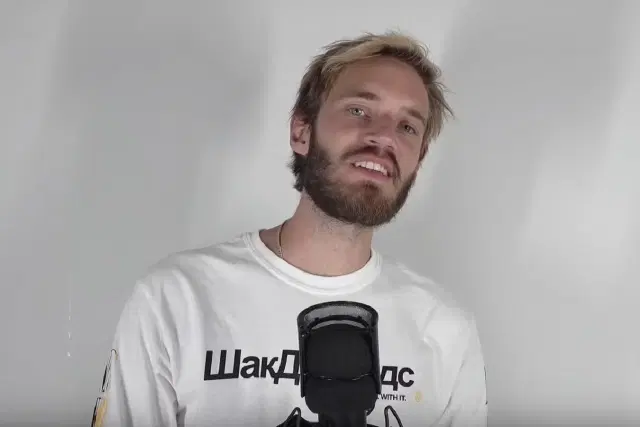
In the past decade, Felix Kjellberg, better known as PewDiePie, turned a subscriber race into a culture war. The result was not just two music videos and a scoreboard; it was a permission structure for anti-Indian ridicule at internet scale.
If you are Indian and you have been dogpiled, memed, or slurred online, you already know how often the trail leads back to the T-Series feud, the "Subscribe to PewDiePie" rallying cry, and a pair of tracks whose punchlines rested on national and racial caricature.
This is not ancient history. The consequences continue to surface across timelines, subreddits, Discord servers, and comment sections. Forgiveness without accountability is amnesia.
Start with what courts and platforms actually said. In April 2019, the Delhi High Court granted an injunction against "Bitch Lasagna" and "Congratulations" after T-Series argued the tracks were abusive, vulgar, and racist. The court’s order recites exactly that, and YouTube geoblocked the videos in India. PewDiePie’s own communications to T-Series, noted by the court, acknowledged the issue.
This was not a hypersensitive audience misreading irony. It was a legal finding that the content crossed lines. The injunction matters because it establishes a clear fact pattern: a creator with unmatched reach produced content that a court called racist, aimed at an Indian target, in a campaign that mobilised millions.
Read the lyrics, and the frame of the joke is obvious. The gag is Indians and Indian English. "Your language sounds like it comes from a mumble rap community" is not a critique of corporate opacity. It is a swipe at people, wrapped in a playground rhyme.
The joke landed because the audience already knew the template from years of "funny accent" content. Media analysis at the time called out the racist texture directly. That is why the tracks were blocked and why reputable coverage treated them as a problem, not just a prank.
Zoom out.
The "Subscribe to PewDiePie" banner was not a harmless fandom. It became a mass identity signal that bad actors could launder into their own stunts, from bridge signs to public pranks and worse. After the Christchurch massacre, where the terrorist invoked "subscribe to PewDiePie" on a livestream before murdering worshippers, PewDiePie publicly asked his audience to end the meme.
You do not disown a meme unless you recognise what it has become. That was an indictment by the creator himself, and it confirms the movement had spun into something no longer defensible.
This sits on top of an older record. The 2017 Wall Street Journal investigation documented "jokes" involving Nazi imagery and paying freelancers to display "Death to all Jews," which cost him his Disney partnership and YouTube Premium series. In a separate incident, he used a racial slur on a livestream and issued an apology. Two patterns jump out.
First, boundary testing with race and religion as the prop. Second, contrition only after consequences. This is a behavioural arc, not a one-off misstep.
Why this still matters for Indians now:
1. The pipeline from punchline to prejudice. When the joke is the way Indians talk, the way Indians look, or the idea that Indians succeed by "bots," you prime an audience for harassment. The T-Series war normalised a lexicon that migrated into ordinary pile-ons against Indian users and creators who had nothing to do with the feud. That is how networked shaming works. The biggest creator does not have to issue a slur; the community learns the target.
2. The platform multiplier. In 2018 and 2019, PewDiePie was the largest individual creator on YouTube. A creative choice at that scale is a policy event. It sets norms for millions of smaller creators who copy the tone to harvest engagement. Courts intervened because the spillover was not theoretical. It was measurable enough to justify a geoblock and an injunction.
3. The permanent record effect. Those tracks seeded an evergreen template for anti-India clout. Every few months, the old refrains reappear under new wrappers. The meme does not die when the creator moves on. It persists as a cultural fossil, ready to be reactivated in any India-adjacent news cycle.
4. The accountability gap. Fans often insist that "it was just a joke" or that he later asked to end the meme. Neither argument addresses the central harm. Courts ruled, platforms acted, and the creator himself conceded the meme had to stop. That is tacit recognition that the line was crossed.
5. The prior art of irresponsibility. The earlier Nazi "jokes" and the n-word incident are not about India, but they are about method. When your comedic engine repeatedly uses protected characteristics as the accelerant, you should not be surprised when a "corporate beef" with an Indian label trains your audience to demean Indians. The arc is continuous.
The standard counterclaim is that this was a satire of a company, not the people. That fails both on text and on impact. The lyrics plainly lean on national and ethnic mockery to land the punches. The reaction, documented by reporters at the time, was an audience that turned those cues into mass harassment and racist riffs. Intent does not erase the effect. At scale, effect is the point.
Another defence says the feud energised Indian creators too, spawning response tracks and boosting competition. That is true and irrelevant. The fact that Indian YouTubers like CarryMinati answered back does not sanitise the original frame. A harmed community producing counter-speech is resilience, not absolution.
The most important piece is responsibility. With great reach comes a duty to constrain your own audience. When a creator learns his rallying cry is being used by extremists, the only credible move is to halt it and reckon with why it caught on.
PewDiePie tried to close the book after Christchurch, but he never made Indians whole for the way his tracks licensed anti-Indian derision in the first place. That lingering deficit is why "let it go" feels like gaslighting to the people who absorbed the blow.
What would accountability look like, minimally? An explicit acknowledgement that the tracks trafficked in racist jokes at Indians’ expense. A permanent, proactive effort to demonetise and demote that content globally, not only under court order in one jurisdiction.
A plain statement to his audience that mocking Indian English and Indian identity is not edgy, it is lazy and hostile. A commitment to platform Indian creators without punching down. None of this is cancellation. It is a repair.
The internet has a bad habit of demanding instant absolution for profitable harm. Indians should reject that trade. The record is clear. A court called the tracks racist. A global tragedy required an emergency distancing from the meme that fuelled the feud.
The creator has a history of racial and religious boundary pushing that only stops when sponsors, platforms, or judges intervene. The downstream harassment of Indians online has not evaporated. You do not forgive what keeps happening. You fix it, or you keep your receipt.
The internet likes to believe it is democratic. But democracies require accountability. When a powerful creator spreads a vocabulary of humiliation to millions, and those millions spread it to others, there is a chain of harm. Many victims of that harm are teenagers, migrants, working people, children, and students. Their harassment is real. Their injuries are real. Their safety is real.
This is the joke that never ended. It became a cultural background noise. And that is precisely why Indians do not, and should not, forgive.
Kishan Kumar is a graduate in Economics from the University of Delhi, currently working in the political communication space. He focuses on narrative-building, strategic messaging, and public discourse, with a strong interest in politics, policy, and media. He posts on X from @FreezingHindoo.
 Join our