Ideas
Architecture Or Economics: What Actually Determines Urban Form?
Janak Pandya
Feb 08, 2026, 06:45 AM | Updated Feb 07, 2026, 10:17 PM IST

To believe that a city can be designed is to commit a category error. It assumes that an urban environment is a problem of geometry rather than a collision of interests. The planner views the metropolis as a system to be corrected. History reveals it as a relentless exercise in friction.
Few figures illustrate this tension better than Victor Gruen. To the extent that he is remembered, it is as the father of the shopping mall, which is to say, suburbia, atomisation, and the erosion of civic life. This is a cruel shorthand. Gruen did not set out to privatise the public square. He wanted to restore it. He failed, of course.
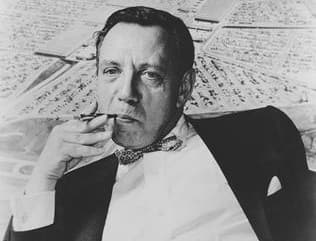

Gruen believed that the automobile had hollowed out cities, dispersing social life across distances that discouraged encounter and weakened civic bonds. His remedy was proximity. He wanted to force people out of their metal carapaces and into the messy, humanising density of the street.
His most telling project never got built: Welfare Island, now Roosevelt Island. Situated in the East River, the island was already an anomaly. Detached from New York's grid and insulated from Midtown's commercial logic, it offered an unusual degree of freedom. Gruen saw possibility in this. His vision was dense, walkable, and human-scaled. The buildings' curvature was dictated by utility, not aesthetics. The pedestrian, not the car, was the organising principle.
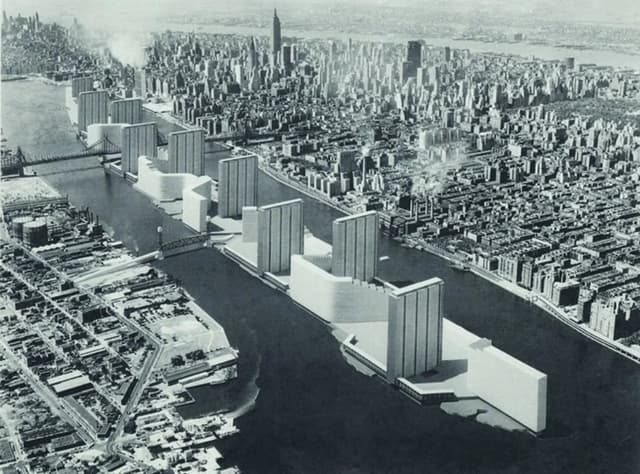
It was never built. Today, Roosevelt Island is a place of bloodless efficiency, its towers standing in polite, regimented obedience to the laws of geometry. The rejection of Gruen's vision is usually mourned by architectural critics as a failure of imagination. In reality, it was a victory of economics.
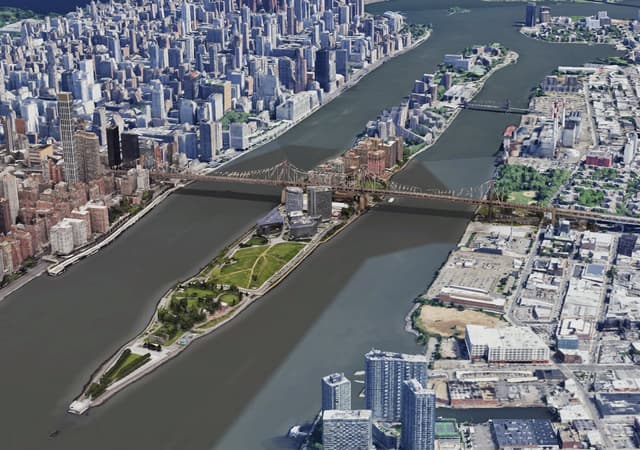
New York is not shaped by aesthetic theory. It is shaped by the price of land. Land is scarce, land is expensive, and indulgence has a measurable cost. Curves surrender floor area. They complicate fabrication. A straight line is not just the shortest distance between two points; it is the most profitable allocation of capital. In such an environment, idealism does not disappear. It is simply priced out.

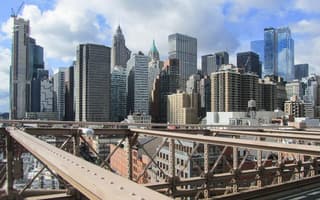
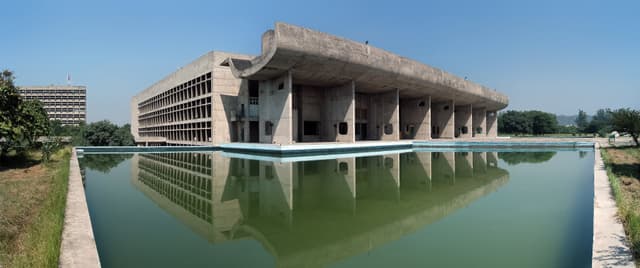
This is a lesson that travels. The 20th century is crowded with figures who believed that clarity of vision could overcome the messiness of human systems. Le Corbusier, whose shadow looms over every discussion of modernism, imagined cities of radiant order, liberated from the squalor of the street.
His ideas found expression in Chandigarh. India's great experiment in concrete rationalism, Chandigarh, is admired, certainly, but it feels less like a city than a museum of a city. It survives because it is the seat of government, insulated from the vulgar vitality of the market.
It is in India, in fact, that the tension between design and demand reaches its breaking point. If the pressures on New York are severe, the pressures on Indian urbanism are existential. A population the size of a continent is being squeezed into acute spatial scarcity. Under such compression, the very idea of "planning" begins to look like a vanity.
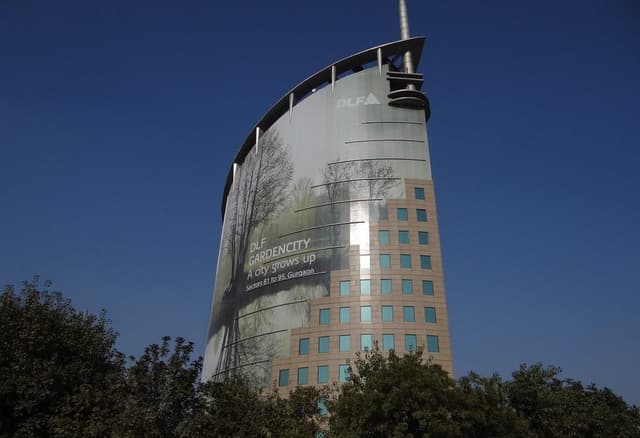
Consider Gurugram, often held up as a symbol of aspiration. Glass curves, sculptural crowns, and performative façades announce global ambition. The intention is to signal global arrival. The effect is fatigue. Architecture that pleads to be liked is rarely respected. It mistakes novelty for seriousness, and consequently, it dates the moment the render dries.

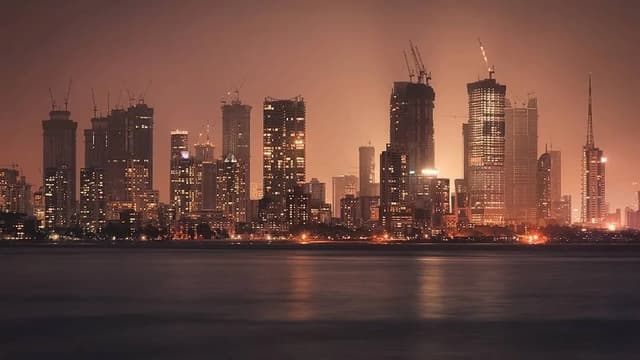
Then turn to Mumbai. The skyline rising over Worli or Lower Parel is frequently denounced as aggressive, ugly, and indifferent to grace. It is all of these things. But it is also honest. The verticality of Mumbai is not a stylistic choice; it is an extrusion of pure demand. Confronted by water on three sides and a scarcity of land that makes Manhattan look expansive, the city does not have the luxury of lyricism. Its buildings are negotiated into existence.
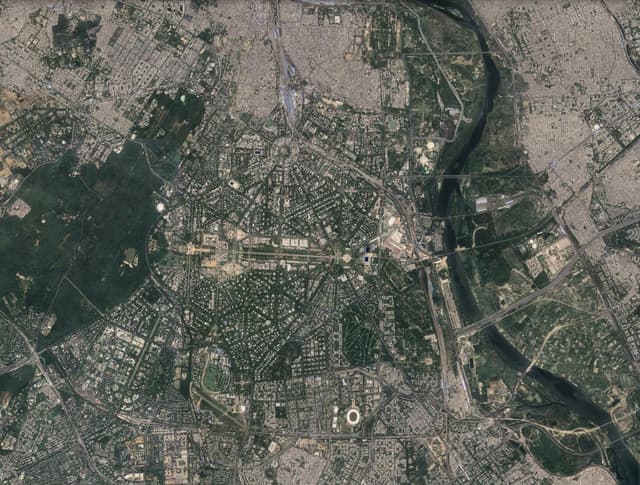
Delhi has immense symbolic capital and considerable land, which paradoxically makes discipline harder. Lutyens' axial clarity dissolves abruptly into post-liberalisation improvisation. The city cannot decide whether it wants to be imperial, global, or merely functional. Its skyline reflects this hesitation.

The lesson of Gruen's failure, and of Bombay's brutal success, is that the city is not an art project. It is not a canvas for moral instruction. Idealism survives only at the margins, or within protected enclaves such as Chandigarh, where market pressure is deliberately restrained by the state. Everywhere else, the city submits to a simpler logic. It builds what pressure permits.


In urban life, constraint is not the enemy of imagination. It is the condition that gives imagination whatever durability it can claim.
 Join our