Infrastructure
India Is Far More Urban Than Official Data Suggests, Says Economic Survey
Swarajya Staff
Jan 29, 2026, 03:44 PM | Updated 03:53 PM IST
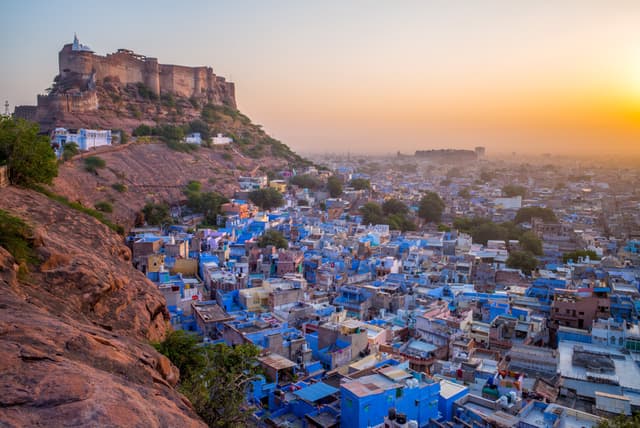
The Economic Survey 2025-26 makes a claim that challenges decades of received wisdom about India's urban trajectory: the country may be far more urban than official statistics have led policymakers to believe.
The Census of India, which has historically defined the contours of urban policy, placed India's urbanisation rate at around 31 per cent in 2011. This figure—suggesting that nearly seven in ten Indians live in rural areas—has shaped everything from infrastructure investment to political narratives about the country's developmental priorities.
The Survey presents a different picture. Using the United Nations Department of Economic and Social Affairs' Degree of Urbanisation (DEGURBA) methodology, which relies on satellite data from the Global Human Settlement Layer of the European Commission, India was 63 per cent urban as far back as 2015. That is nearly double the census figure.
The Janagraha Foundation's Annual Survey of India's City Systems 2023 reaches similar conclusions through different methods. The gap, the Survey suggests, is not a statistical quirk but a systematic undercount with real consequences.
Why The Census Misses Urban India
The divergence stems from how urbanisation is defined and measured. The Census of India classifies settlements as urban based on three criteria: a population greater than 5,000; at least 75 per cent of male employment in non-agricultural activities; and a minimum population density of 400 persons per square kilometre. Additionally, settlements administratively designated as statutory towns are counted.
These criteria, the Survey notes, were designed for an era when the distinction between rural and urban was relatively clear-cut. Today, that boundary has blurred. Satellite imagery, night-time light data, and analysis of built-up areas reveal extensive urban-like settlement patterns that fall outside the census definition.
The Survey includes night-time light radiance maps from ISRO's Bhuvan platform comparing 2012 and 2023. The images show dramatic expansion of semi-urban and peri-urban zones around major cities—areas that may not meet the technical census criteria but are functionally urban in terms of economic activity, mobility patterns, and infrastructure demands.
Analysis by the Ministry of Housing and Urban Affairs confirms this pattern. In 16 major cities studied, the periphery-to-core growth ratio exceeds one, indicating that peripheral areas have consistently grown faster than urban cores between 2000 and 2020. India's metropolitan expansion, the Survey concludes, is "overwhelmingly outward, with new growth increasingly concentrated in urban fringes beyond municipal boundaries."
The Kerala Case Study
The Survey presents a detailed case study of Kerala to demonstrate how spatial classification methods reveal a dramatically different urbanisation picture.
Using the DEGURBA methodology for 2010, 2020, and 2025, the analysis maps population-density grids at the 1 square kilometre level and classifies them into Urban Centres, Urban Clusters, and Rural Areas based on standardised criteria.
Settlements are categorised as "New Urban Centres" if at least 70 per cent of their area falls within Urban Centre grids, and as "New Urbanising Settlements" if 70 per cent or more lies within Urban Cluster grids.
The results are striking. In 2010, the DEGURBA framework identified 420 settlements with urban characteristics housing approximately 8.2 million people. When combined with statutory towns, Kerala's urban population increased from the official 47.7 per cent to around 72.2 per cent.
By 2020, accounting for the creation of 34 new urban local bodies and expansion of existing municipal boundaries, the estimated urbanisation rises to about 80.8 per cent. The 2025 estimates indicate 526 spatially identified urban-type settlements, raising the urbanisation estimate to 82.6 per cent—a level, the Survey notes, "broadly aligned with long-term demographic projections for the state."
Complementary analysis of built-up areas reinforces these findings. Between 2010 and 2025, built-up area expanded by 11.4 per cent in Kochi, 17.6 per cent in Thiruvananthapuram, 17.5 per cent in Kannur, and 19.6 per cent in Thrissur. Periphery-to-core growth ratios reached as high as 5.9 in Kannur.
Why This Matters
The Survey argues that this measurement gap has real policy consequences. Planning frameworks built around an outdated understanding of where people actually live and work will systematically underinvest in infrastructure and services for those populations.
Consider the implications. If India is 31 per cent urban, the planning challenge is primarily about managing migration and preparing for future urbanisation.
If India is already 63 per cent urban—or higher in states like Kerala—the challenge is fundamentally different: upgrading and integrating settlements that are already functionally urban but lack the institutional recognition, infrastructure, and services that formal urban status would bring.
These "New Urbanising Settlements" serve large populations and play significant economic and social roles. Yet because they fall outside municipal limits, they often lack access to urban planning frameworks, municipal services, and targeted infrastructure investment. They exist in an administrative grey zone—too urban to be served by rural schemes, too informal to access urban programmes.
The Survey recommends institutionalising spatial tools like DEGURBA as complementary monitoring instruments to track settlement transitions and support evidence-based planning. It calls for planning approaches that extend beyond city boundaries to manage growth at a regional scale, using tools such as GIS-based master plans, multimodal mobility frameworks, and designated Special Planning Zones.
A Different Policy Conversation
The implication of the Survey's analysis is that the conversation about Indian urbanisation may need to shift. The traditional framing—of a predominantly rural country gradually urbanising—may be masking a reality in which urban India is already here, just not officially recognised.
As the Survey puts it, Kerala's urbanisation "features numerous dispersed settlements with urban functions, many outside town boundaries." The same pattern, the data suggests, is playing out across the country—visible in satellite imagery, night-time lights, and built-up area analysis, even when invisible in official statistics.
For policymakers, the message is clear: the cities they need to plan for may already exist. The question is whether planning frameworks will catch up.
---
The Economic Survey 2025-26 was tabled in Parliament on 29 January 2026.
 Join our