
Legal
Supreme Court Recalling Its Vanashakti Ruling Signals A Shift From Environmental Extremism To Judicial Pragmatism
Ayan Mohanty and Ananth Krishna
Nov 21, 2025, 11:50 AM | Updated 12:36 PM IST
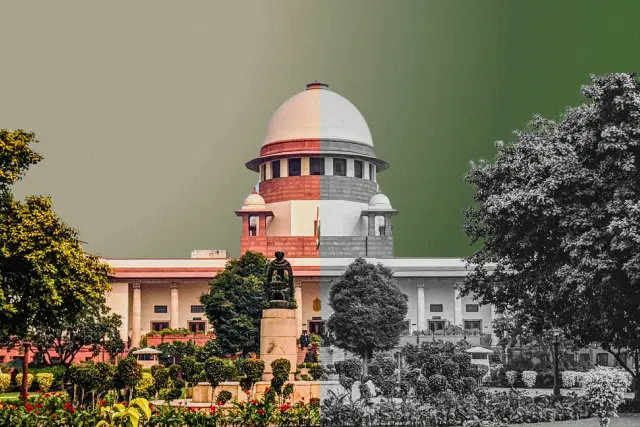
The Supreme Court’s decision to recall its decision Vanashakti v. Union of India (2025), which had struck down ex post-facto environmental clearances, has provoked a range of reactions.
The 3-Judge Division Bench of the Supreme Court held a majority view that the decision was per incuriam i.e. taken without regard to all the facts. While Chief Justice of India B.R. Gavai and Justice Vinod Chandran wrote concurring opinions, Justice Ujjal Bhuyan, who was part of the original bench, dissented.
The earlier Vanashakti ruling had categorically prohibited ex post-facto environmental clearances (ECs), arguing that any retrospective approvals violate the precautionary principle and the right to a clean environment.
Environmentalists have decried the judgement for favouring “corporates” and “big business” over the environment, and some critics may call this a race to deregulation. Yet the Court’s rulings highlighted significant issues with the earlier judgement and the precedent it laid down.
The earlier ruling had taken an absolutist view, holding that any retrospective environmental clearance violates the precautionary principle and the right to a clean environment, leading to a blanket ban on construction that failed the prior EC requirement.
Judicial Intent For Recalling
The Court’s decision to recall the earlier judgement is based primarily on a legal technicality and not to reconsider the broader mandates of environmental law and jurisprudence.
The earlier judgement had barred post-facto ECs putting certain ongoing or completed projects without a prior EC at risk of demolition. This earlier judgment was declared per incuriam for failing to consider the Supreme Court’s earlier ruling of D. Swamy (2021), Alembic Pharmaceuticals (2020) and Common Cause (2017), as it allowed limited regularisation in exceptional circumstances.
These cases had taken different views on post-facto clearances, and failing to consider them created an incomplete legal picture. Because of this gap, the Court felt the earlier conclusion could not be treated as final without a fresh review.
Justice Vinod Chandran underlined that the “prior EC” requirement arises from delegated legislation, and that if the executive has the power to impose a legal requirement, it also has the authority to relax it. He also specifically noted that a “strict, straitjacket implementation of a strict regulatory regime will also be counter-productive”.
Meanwhile, Justice Bhuyan, in his dissent, remarked that the review was “retrogressive” and stated that the court cannot be seen to be backtracking on environmental protections.
Balance Between Sustainability and Development
It should be noted that environmental clearances are governed by the Environment (Protection) Act, 1986, and are implemented through the EIA Notification, 2006, which states that the mandatory EC is required for all building and construction projects, including townships and area development projects, that have a built-up area of more than 20,000 square meters.
Over the years, the notification has been amended more than 100 times as per the records of the Union Ministry of Environment, Forest and Climate Change through the office of memorandums, often to ease the project clearances. In its most recent move, the Ministry has relaxed the green belt criteria for Industrial Parks and Estates.
Implications of this Vanashakti Judgement
CJI Gavai noted that, as per the earlier Vanashakti Judgement, even after payment of the penalty, if the project is under construction, it has to be stopped and demolished, and even if the operation has already commenced, it has to be stopped and demolished.
However, CJI Gavai observed that this approach contradicts the framework of the 2017 Notification and the 2021 Office Memorandum, which allow environmental clearances for projects that are legally permissible and mandate demolition only where a project is impermissible or cannot be made environmentally sustainable. Demolishing existing infrastructure for mere procedural lapses can cause disproportionate economic harm and worsen environmental impacts due to debris.
CJI Gavai also noted that many projects, including the 962-bed AIIMS Hospital in Odisha, a green field project in Karnataka and the Central Armed Police Forces Institute of Medical Sciences in Delhi, were held up as a result of the earlier Vanashakti Judgement.
Other projects based on the precedents set in previous cases were allowed to continue construction by paying a fine for post-facto EC compliance. This results in a situation where discrimination without a reasonable basis has occurred between projects.
What the Recall Actually Means
The Supreme Court’s recall does not automatically validate the exemption regime or the Government’s administrative relaxations as valid. The matter will now be heard afresh by a new bench, taking into account the earlier judgements that this current review has highlighted. This will likely be heard by a bench constituted by the incoming Chief Justice (Justice Suryakant).
The remarks on the practical implications of strict environmental regulations that have been highlighted by both Chief Justice Gavai and Justice Chandran are hopefully a sign of a court looking to balance environmental safeguards with economic considerations.
However, environmental jurisprudence and its principles are slanted towards strict and regulatory requirements with little to no leeway. A balance must be struck between the two, and it is doubtful if the court can take such a nuanced view, even when the matter is considered afresh.
Ayan Mohanty is a policy consultant at Nation First Policy Research Centre. Ananth Krishna is Research Director, Nation First Policy Research Centre.
 Join our