Legal
Repeated Reversals Of Its Own Judgments Show How Badly Supreme Court Is In Need Of Reform
R Jagannathan
Nov 20, 2025, 07:30 AM | Updated Nov 19, 2025, 03:30 PM IST
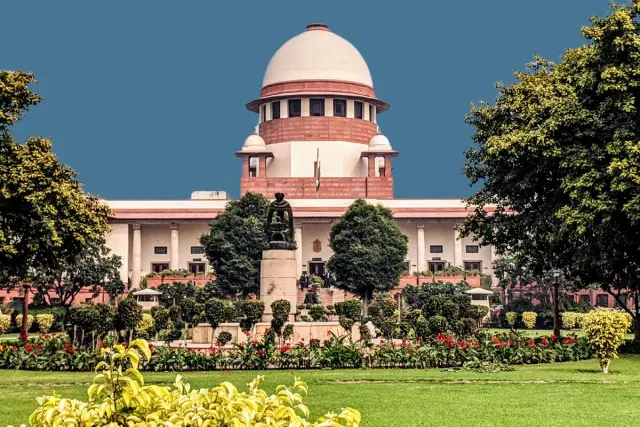
It would not be an overstatement to claim that the Indian judiciary is one of the least reformed institutions in India.
The latest evidence of this comes from the reversal of an earlier judgment that struck down retrospective environmental clearances for projects. The grounds for the reversal were the high cost of trying to demolish or destroy Rs 20,000 crore worth of projects.
Nor is this the only judgment reversal in recent years. A few weeks ago, the Supreme Court agreed to allow the government to reconsider Vodafone Idea’s adjusted gross revenues (AGR) dues after repeatedly refusing to do so earlier. In effect, it has allowed the government to show special consideration to one company that is financially on the ropes. Again, a reversal that opens up a minefield for the future.
Earlier, in September, the apex court reversed another judgment of another bench that had rejected the insolvency resolution of Bhushan Steel and Power, which resulted in the company going to JSW Steel. Not only was the reversal of an insolvency court order shocking after so many years, but its final re-reversal by the Supreme Court enabled JSW and banks to breathe easy. Again, what is the point of resolving any insolvency if it can be reopened and reworked so many years after resolution, in this case in 2021?
In August, in a petition seeking the removal of stray dogs from Delhi, the Supreme Court first ordered the state government to move all these dogs to shelters. It later modified this to say that dogs must be sterilised and vaccinated, and then again, in November, it ordered the removal of strays from public places such as schools, hospitals and highways. This order applies to the whole of India.
And these are not the only cases where Supreme Court judgments have been found to be poorly thought through. Any court that frequently has to reverse its own judgment is clearly not doing its job well. It implies that at least some of the people now adorning the highest levels of the judiciary may have been picked not for the quality of their judicial minds, but for other reasons.
Worse, in a recent case involving the discovery of huge hoards of cash with a judge of the Delhi High Court (Yashwant Varma), the Supreme Court, far from showing that the law of the land is as applicable to judges as to ordinary citizens, carried out its own in-house inquiry and then asked parliament to impeach him without a formal police enquiry. It seemed as if the court simply wanted to close the matter as quickly as possible without getting into the gory aspect of how so much cash came to be discovered in a judge’s house.
Nor is the quality of judges the only problem. As of 25 September this year, over 5.3 crore cases were pending in various courts, including 4.7 crore in district and subordinate courts, 64 lakh in the high courts and over 88,000 in the Supreme Court itself. The reasons why these cases are pending make for shocking reading.
Over 62 lakh cases are pending as they have no counsel, 35 lakh because the accused have disappeared, and 26 lakh because witnesses have gone missing. This is an indictment not just of the judiciary’s ability to uphold the rule of law, but also of the inability or unwillingness of the police and legal fraternity to do their jobs. They seem to be in cahoots with one another to indirectly prevent the delivery of justice to those seeking it.
There is a need for root and branch reform in the judicial system, which also has to include the police and the legal system in general. The system not only fails to deliver quick justice, but is prone to manipulation and misdirection by vocal special interest groups and powerful people, including politicians and wealthy individuals.
Apart from police reform, which needs to be carried out at both the central and state levels, the five primary issues that need addressing are the following.
One, the collegium system, where judges effectively select judges, needs to be scrapped and replaced by a more neutral appointments commission where political meddling is minimised. The 2014 National Judicial Appointments Commission was a reasonable first attempt at ending the problem. But a five-judge Supreme Court bench simply junked it without giving it a try. At the very least, it could have read down the provisions it felt were not conducive to judicial independence.
That decision set back judicial reform by at least a decade and counting. We need another NJAC, and perhaps this time we can have a multi-partisan committee composed of former chief justices and legal luminaries to get a consensus on how the highest judicial appointments should be made.
Two, the Supreme Court, as it is presently organised, acts both as a final court of appeals in civil and criminal cases and as a constitutional referee. There is simply too much in its remit, and there is not enough specialisation in any area. Otherwise, why would commercial or civil judgments, as noted above, need to be repeatedly reversed? Consider the cost imposed on the economy in the process, and the constitutional damage caused by repeatedly intruding into the executive and legislative domains.
Why is the dog menace or urban pollution a problem for the Supreme Court to solve, and why is the monitoring of specific criminal investigations something for the apex court to supervise? The logical solution is to break the Supreme Court into three, one to look only at constitutional issues, another to function as the final court of appeals, and a third to handle commercial and business disputes, which need specialised attention since they involve massive economic stakes.
Three, there should be laws limiting the time taken to file charges, appeals, adjournments and other actions that generally delay court decisions. The courts should not allow dilatory tactics, and these limits must be hardcoded into law so that individual judges at the district and subordinate levels do not misuse their powers to benefit particular parties.
Four, India needs a sentencing commission to ensure that the same crimes do not fetch different punishments in different courts. There has to be a longitudinal study to gather evidence on the kinds of penalties or punishments awarded in civil and criminal cases. There is no doubt that similar crimes often vary widely in terms of the final punishments imposed.
This is because human bias sometimes cannot separate evidence from extraneous factors such as who the accused is, whether a person is seen as attractive or unattractive, what the political context is and who the lawyers are. If the same crime gets a two-year sentence in one case and ten years in another, it suggests that human biases are at work. In the United States, there is a Sentencing Commission which studies how judges hand down sentences and offers guidelines to minimise wildly different judgments in similar cases. India needs one urgently.
Five, there is the issue of specific lawyers who tend to wield disproportionate influence over court hearings and even judgments. Some lawyers like Kapil Sibal, Abhishek Manu Singhvi or Prashant Bhushan, along with a few others, seem able to get the courts to listen whenever they want, while not everyone can. Until this is curbed, we are not going to get any kind of justice.
Former Supreme Court judges have themselves spoken about the power of these super-lawyers. Former Chief Justice Ranjan Gogoi, in an interview with The Times of India in 2020, said the following.
“Independence of judiciary means breaking the stranglehold of half-a-dozen people over it. Unless this stranglehold is broken, judiciary cannot be independent. They hold judges to ransom. If a case is not decided in a particular way advocated by them, they malign the judge in every way possible. I fear for the status quoist judges who do not want to take them on and who want to retire peacefully.”
Earlier, the sole dissenting judge in the National Judicial Appointments Commission case, Justice Jasti Chelameswar, also hinted at the power of some lawyers who charge massive fees from wealthy clients and get their way.
Justice Chelameswar, when asked about judicial corruption, had this to say in an Economic Times interview:“Justice (JS) Verma made a statement, Justice (PS) Bharucha (both former CJIs) made a statement, but did anything happen in this country? None of these Rs 1 crore per day lawyers spoke up. They have appeared before all the judges whom they condemned subsequently. So, what's the point talking about it.”
Indirectly, Justice Chelameswar was suggesting that the powerful lawyers are not particularly interested in ending judicial corruption.
The takeaway is simple. If justice in a specific case depends on who is arguing it, we are dealing with undue and unfair influence, not justice.
Jagannathan is former Editorial Director, Swarajya. He tweets at @TheJaggi.
 Join our