Obit
Ajit Pawar: Pragmatist, Power Broker, Man Of Baramati
Aditya Bharadwaj
Jan 28, 2026, 05:03 PM | Updated 05:03 PM IST
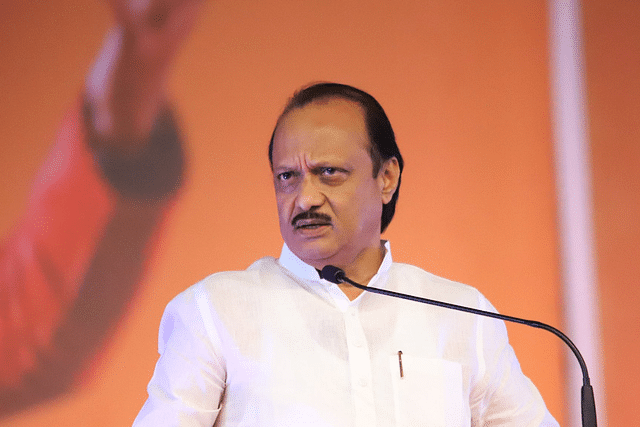
Shri Ajit Pawar, or Dada as he was affectionately known among his constituents and party colleagues, passed away on 28 January 2026, in an aircraft crash at Baramati Airport, his family's traditional political homeground. His sudden demise leaves a deep void in the political landscape of Maharashtra and in the hearts of countless supporters across Western Maharashtra.
Born in Ahmednagar district on 22 July 1959, Ajit Pawar rose to become one of the most influential leaders of his generation in Maharashtra, serving multiple terms as the Deputy Chief Minister. He followed in the formidable footsteps of his uncle, Sharad Pawar, who himself became Maharashtra's youngest Chief Minister at the age of 38.
Ajit Pawar's political journey was defined by his determined pragmatism, sharp political acumen, and a fierce loyalty to his constituency. He was one of the last prominent figures of Maharashtra's traditional political dynasties that still retained a deep connection to the ground.
Dada prided himself on being accessible to the common man. Known to be a tireless worker, he was often the first to arrive at his office and the last to leave, embodying a hands-on style of administration that inspired both admiration and fear within bureaucratic circles.
A Legacy Built on Regional Pride
Ajit Pawar's name is often associated with the development and industrial progress of Western Maharashtra. During his tenure, he played a decisive role in promoting industrialisation and urban expansion in Pune, Pimpri-Chinchwad, Baramati, and the wider Pune district.
His drive to transform these areas into economic powerhouses reflected not only his strategic vision but also his deep-rooted sense of regional pride. Dada's single-minded pursuit of the Pune-Nashik Rail Link stands as an enduring example of his commitment to connectivity and growth for his region.
However, like many focused regional leaders, his emphasis on Western Maharashtra also drew criticism. His strong advocacy for his home turf sometimes came at the expense of other regions such as Marathwada and the Mumbai Metropolitan Region, which faced slower allocation of resources during his time in government as part of the UPA.
Ajit Pawar's model of constituency-first development became a template for efficiency and result-oriented governance that many young politicians continue to emulate.
A Man of the People
One of Ajit Pawar's most defining qualities was his connection with his voters. Fluent and witty in Marathi, his speeches were often sharp, humour-laden, and laced with earthy idioms and regional references that resonated with the crowd. His informal, unscripted style, often delivered with a mix of admonition and affection, was unmistakably his own.
This made him a crowd-puller and a powerful campaigner, although at times his remarks invited controversy, including the infamous remark delivered when a farmer asked him about lack of water in the dams during a drought.
Yet, behind his tough-talking exterior lay an astute understanding of people's needs and emotions. Admirers contend that he rarely allowed caste politics to dictate his decisions or rhetoric. He strengthened the Nationalist Congress Party's base across diverse communities.
The Organiser and Administrator
Within the corridors of power, Ajit Pawar was respected as one of the most efficient administrators in Maharashtra's modern history. As a long-serving Minister of Finance and later as Deputy Chief Minister, he earned a reputation for keeping state finances stable even in challenging times.
His critics accused him of being overbearing and controlling, but few doubted his ability to get things done. Bureaucrats who worked with him often spoke of his relentless pursuit of accountability and his insistence on deadlines, a work ethic that kept departments on their toes.
He was also a shrewd organisational strategist who carefully groomed the NCP cadres. Under his stewardship, the party remained relevant even as its traditional rural base began to shift towards urban and semi-urban regions.
His ability to identify emerging talent and distribute responsibilities effectively ensured that the NCP could hold its ground amid the rapidly changing political landscape of the 2010s and 2020s.
Ajit Pawar's career was not without blemish, of course. He was accused of corruption and misuse of power, particularly in connection with irrigation projects and favouritism towards firms linked to his family. Despite several inquiries and political storms, he managed to stay afloat thanks to his resilience and his political tact.
While these controversies dented his image among reform-minded voters, they did little to diminish his influence within the state's power structure. As one of Maharashtra's longest-serving Deputy Chief Ministers, he controlled vast levers of bureaucracy regardless of which party held power.
His ability to negotiate with opponents and forge alliances during crises made him an indispensable figure in state politics.
A Political Realist
Ajit Pawar was a political realist more than an idealist. He understood the nuances of power and the compromises it demanded. Whether in the Treasury benches or in Opposition, he never lost focus on maintaining relevance, a skill that sometimes earned him the label of opportunist but also demonstrated his instinct for survival.
His dramatic split from the NCP to align with the Shiv Sena-BJP alliance, though controversial, exemplified his pragmatic streak. A political gamble motivated by frustration over being sidelined in his uncle's shadow, it reflected his tact. Yet, even in that phase, he maintained that his decision was guided by development priorities rather than personal ambition.
The End of an Era
Away from the public gaze, Ajit Pawar was a family man. He is survived by his wife, Sunetra Pawar, and their two sons, Jay and Parth Pawar. Known for his simple habits and disciplined lifestyle, he preferred the quiet of Baramati over the bustle of Mumbai. His calm demeanour and understated charisma made him approachable to colleagues and citizens alike.
With his passing, Maharashtra has lost one of its most formidable political tacticians and a link to a generation of leaders who rose from grassroots movements to dominate state politics. His death leaves the NCP facing a critical leadership vacuum and Maharashtra without one of its most seasoned administrators.
Ajit Pawar's legacy is a patchwork of success, controversy, and resilience, but above all, it is a story of persistence in public life.
He took forward the industrious and forward-looking spirit of Western Maharashtra, while advocating self-reliance and the primacy of regional identity within the framework of national unity. A nationalist at heart and an anti-caste leader by conviction, his life and career embodied the complex realities of Indian democracy.
Dada's passing marks the end of a chapter in Maharashtra's political history, where political dynasts still maintained a connection and were raised from the ground instead of fancy environs and institutions in cities.
Aditya Bharadwaj is an Advocate at the Bombay High Court and a public policy professional. His interests lie at the intersection of business, finance and economics.
 Join our