Science
India Tests LPG Substitute As CSIR-NCL Scales DME Pilot To 250 Kg Daily, Targets 2.5 Tonne Per Day Plant
Swarajya Staff
Mar 14, 2026, 05:01 PM | Updated 05:01 PM IST
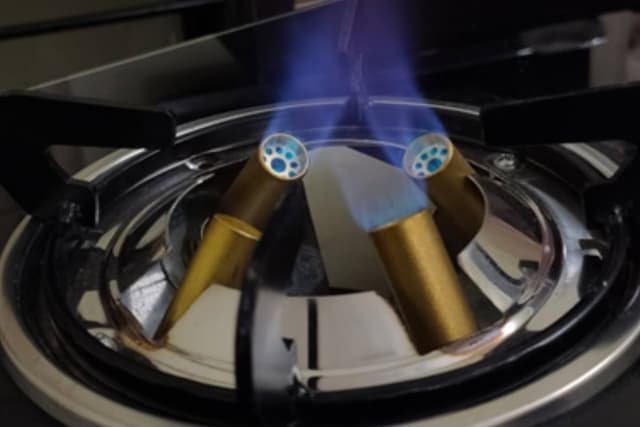
The Council of Scientific and Industrial Research–National Chemical Laboratory (CSIR-NCL) in Pune has scaled up its pilot facility for producing Dimethyl Ether (DME), a clean alternative to liquefied petroleum gas, to approximately 250 kilogrammes per day.
Researchers at CSIR-NCL have developed a patent-protected technology that converts methanol into DME using a specially designed catalyst, marking a significant step towards reducing India's dependence on imported cooking fuel.
The technology, developed under CSIR's Catalysis for Sustainable Development mission mode project launched in 2017, has reached a Technology Readiness Level of 6-7.
The pilot capacity has grown roughly tenfold, from 20-24 litres per day in 2020 to 250 kilogrammes per day now.
Scientists are now working with engineering partners to build a demonstration plant capable of producing around 2.5 tonnes per day, which could pave the way for large-scale commercial production.
DME has physical properties similar to LPG and can be stored as a liquid under pressure, making it suitable for use in existing fuel systems without requiring major infrastructure changes in cylinders, regulators, or pipelines. Efficiency trials have shown 10-15 per cent improvement over conventional LPG burners, with cleaner combustion producing lower nitrogen oxides, lower sulphur oxides and no soot.
The Bureau of Indian Standards allows blending of up to 20 per cent DME with LPG, with up to 8 per cent blending requiring no change in existing infrastructure.
Former CSIR Director General Raghunath Mashelkar had called for urgent support to scale the technology on 10th March 2026, highlighting its potential to address India's energy security concerns.
Researchers estimate that replacing just 8 per cent of LPG consumption with DME could save nearly Rs 9,500 crore annually in foreign exchange.
India consumes roughly 31.3 million metric tonnes of LPG a year and imports between 60 and 67 per cent of what it needs, with over 90 per cent of those imports transiting through the Strait of Hormuz.
CSIR-NCL has signed a Memorandum of Understanding with Engineers India Limited for development and commercialisation of the technology.
Separately, CSIR-IICT in Hyderabad and BHEL Corporate R&D have signed an MoU under DST's Carbon Capture and Utilisation initiative to develop a CO₂-to-DME pathway.
In December 2025, Godavari Bio-refineries Limited launched a pilot to convert industrial CO₂ directly into DME, demonstrating private sector interest in the technology.
 Join our