States
This Bengaluru-Based Party Asks: Can You Change India One Pothole At A Time?
Adithi Gurkar
Feb 23, 2026, 01:47 PM | Updated 01:47 PM IST
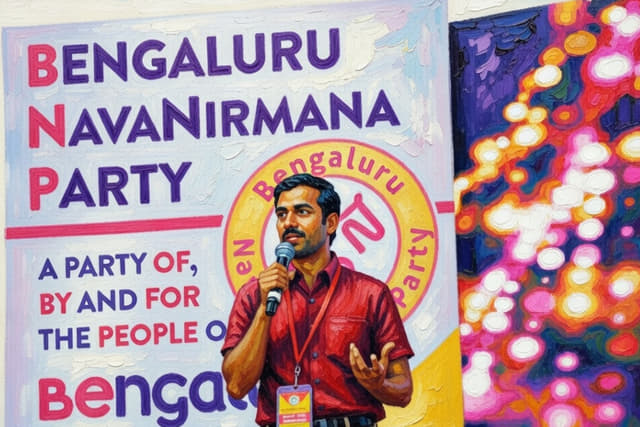
The death came at a junction near Benniganahalli that everyone knew was dangerous. A seventeen-year-old girl, trying to cross a road that had been flagged for a skywalk years earlier, didn't make it. For Srikanth Narasimhan, whose apartment overlooked that stretch of road, the incident wasn't just tragic—it was clarifying.
"The death was probably just the tipping point," Narasimhan tells me when I ask about that September evening in 2019. "It had been building up for quite some time." He speaks with the measured precision of someone who has told this story before, but the frustration underneath remains fresh. Through his work with the Bangalore Apartments Federation—representing six lakh citizens across the city's burgeoning apartment complexes—he had spent years engaging with politicians, agencies, and officials. Everywhere, he says, citizens faced roadblocks.
The garbage was emblematic. Residents in apartments would carefully segregate their waste, only to watch contractors mix everything together before dumping it in landfills. When they tried to shift to professional agencies that actually processed waste properly, they were blocked by elected representatives. "Effectively," Narasimhan says, "the garbage contractors are the benamis of the corporators and the MLAs."
But it was the skywalk—or rather, its absence—that crystallized everything. "We had been asking for it a few years prior to the incident because it was a dangerous junction," he recalls. Even after the girl's death, nothing happened. The usual stories, the usual delays. So they staged a protest with about a thousand people. The numbers spoke. A budget appeared out of nowhere. Work began. Then, just as suddenly, it stopped. "The road got dug up on both sides and the work came to a grinding halt," Narasimhan says, his voice taking on a harder edge, "all because the MLA of the area wanted a cut."
That was when he said enough.
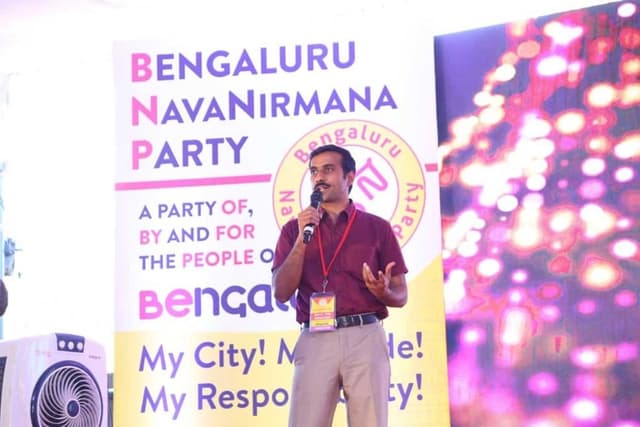
An IIM-Bangalore alumnus with a successful career in investment banking, Narasimhan decided to do something almost no one in his position does: register a political party. Not a movement, not an NGO, not a lobbying group—a proper, Election Commission-registered political party. With one peculiar constraint written into its founding documents: Bengaluru NavaNirmana Party would never, under any circumstances, contest state or national elections.
Not now. Not later. Not ever.
The Constraint as Mission
Most people who hear about BNP's self-imposed limitation react the same way. They tell Narasimhan he's making a mistake. "There is a lot of pressure on me to contest the MP and MLA elections," he acknowledges. "But I have been very clear right from the start—that is why the party has the name Bengaluru in it."
The reasoning, he explains, is twofold. "From a purely political perspective, when you look at national and state issues—be it the hijab controversy, the Dharmasthala temple dispute—there are so many politicians and political parties fighting these issues out." He pauses, choosing his words carefully. "I don't want to sit in judgment of whether those issues are important or not. However, when it comes to local issues, there is absolutely nobody to even talk about them, forget working on and resolving them." His conclusion: "India does not need yet another political party talking about the same set of things."
The second reason is strategic. "We want to pick our niche and prove ourselves in it. And that niche is local issues and municipal elections." It's a gamble on something he believes but cannot yet prove: that people vote very differently in local body elections than they do in state or national polls. "I believe this phenomenon will be even more pronounced when it comes to municipal elections," he says. "More and more people will look at local issues, local problems, local leaders, and local solutions."
He may be right. Studies of voting behavior in states like Odisha, West Bengal, Tamil Nadu, and Delhi show significant divergence between state and national preferences. But municipal elections remain understudied terrain, their dynamics obscured by low turnout and limited media attention. Narasimhan is betting that the faces of Modi, Rahul Gandhi, Siddaramaiah, or Yediyurappa don't cast the same shadow at the ward level that they do in assembly or parliamentary contests.
"The challenge is still out there for us to demonstrate that we are the right people for the job," he admits. "If people don't vote for us, it won't be because of national or state issues but because they don't know what this new party stands for."
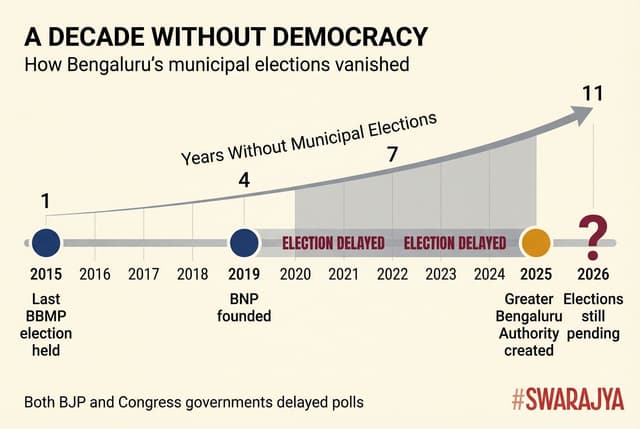
Six years in, that demonstration remains theoretical. BBMP elections—the battlefield BNP was built for—haven't been held since 2015.
The Architecture of Transparency
While waiting for elections that never come, BNP built something else: an alternative infrastructure of accountability.
Every year, the municipal corporation of Bengaluru—the BBMP for the last decade—spent between ten thousand and fifteen thousand crore rupees. BNP decided to ask for the details. "Citizens have the right to know and participate," Narasimhan says. "When it comes to roads, drains, playgrounds, and parks, information should be readily and easily available."
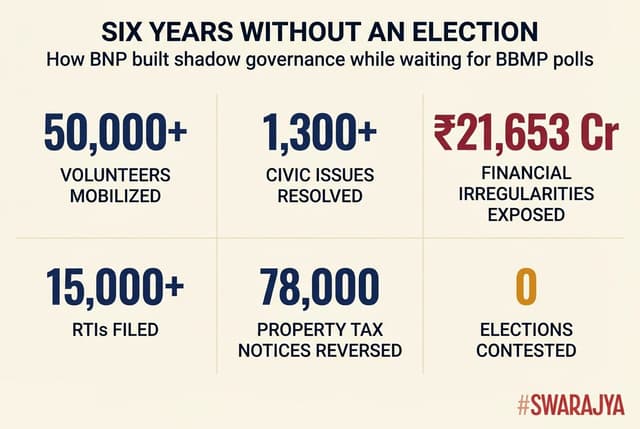
But officials dodged. They asked for RTIs. They created procedural hurdles. So BNP did something remarkable: they went into the Integrated Financial Management System themselves and pulled out everything. "We constituted a team within BNP and extracted details of 63,629 ward-level projects worth ₹21,653 crores," Narasimhan says. "Year by year, project by project, ward by ward. And we put it out in the public domain."
The data revealed something shocking. Fifty percent of all projects were being given to a single agency—the Karnataka Rural Infrastructure Development Limited—without any tendering process. Every year, no matter which party was in power, Congress or BJP, a blanket exemption was provided in violation of the Karnataka Transparency in Public Procurement Act. BNP termed it the "4G scam."
"This agency—a government of Karnataka entity—has been blacklisted many times in the past," Narasimhan notes. "There are no publicly available audits or accounts." Through sustained pressure, BNP managed to bring the matter under the lens of the Enforcement Directorate. Projects, at least temporarily, stopped going to KRIDL.
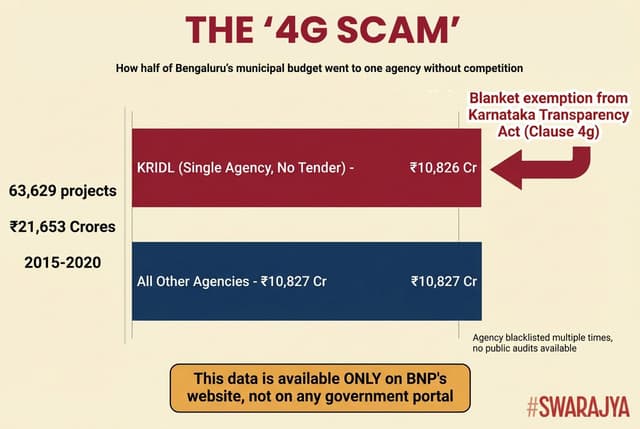
Interestingly, that information—63,629 projects worth ₹21,653 crores—is not available on the BBMP website, or on any government portal. It exists only on BNP's website. "If we can do it, why can't they?" Narasimhan asks. "We're not even in power. Nor are we blessed with resources. In fact, this was done completely on a voluntary basis by a team of people."
The BRIGHT platform—BNP's Budget Repository and Information Gateway for Honest Tracking—now allows any citizen to look up their ward, search for specific project types, and see budget allocations. Many have used this information to ask uncomfortable questions at ward committee meetings. It's transparency weaponized.
CAT: A Philosophy of Restraint
Narasimhan has distilled his approach into an acronym: CAT—Citizen Participation, Accountability, Transparency. But the order matters. Transparency comes first, enabling citizen participation, which in turn creates accountability.
"I feel the root cause of corruption is lack of transparency," he says. "When citizens are unaware, politicians can run riot." At the municipal level, he argues, this matters even more than at higher levels of government. "We're not talking about defense contracts. We want the details of all corporation projects—the tendering process, budget allocation, expenditure, audits and accounts—all of it made publicly available in real time."
Right now, BNP can only do post-facto work, auditing what has already been spent. "But this will happen in real time when we are in power," he says. Then he adds something striking: "It's not a promise I'm making. I've already delivered on that promise by displaying details of the previous council's projects."
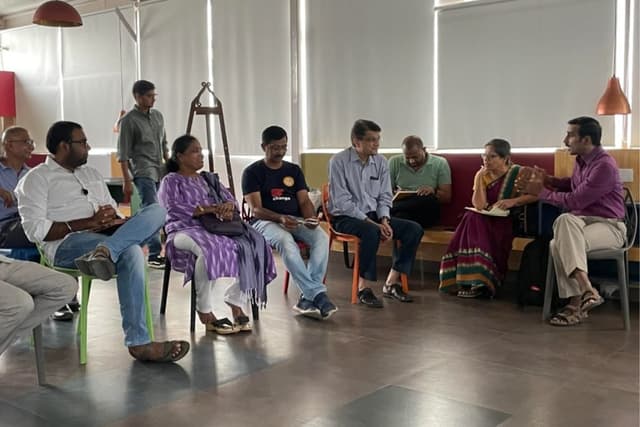
Citizen participation, the second pillar, is operationalized through Area Sabhas—hyperlocal citizen assemblies that the Karnataka High Court ordered but that BBMP never implemented. "There is a concept called Area Sabhas where citizens can get involved in not just learning about ward-level budgets but also having decision-making power," Narasimhan explains. Which roads need to be made, where trees should be planted, where streetlights need installing—all these decisions, he believes, should be made by citizens, not handed down by officials.
BNP has already created informal Area Sabhas through its two-thousand-strong membership base. "Wherever we get elected, they will be formalized," he says. The new Greater Bengaluru Act removed the Area Sabha mandate from law. Narasimhan's response is pragmatic: "They can remove it from the law, but I will ensure that it remains in the minds of the people. Wherever BNP corporators are, there will be Area Sabhas."
And accountability? Here Narasimhan makes an admission that is both disarming and strategic. "I'm not going to say I'm an incorruptible person," he tells me. "Tomorrow, I don't know if somebody presents Rs 100-200 crores in front of me how I may react." The solution, therefore, isn't to rely on individual virtue. "I'm putting systems and processes in place which will not be dependent on any individual or on the whims and fancies of a small group of people. I'm democratizing the process of progress."
It's a fascinating inversion of how Indian politics typically works. Rather than promising that his people are different, Narasimhan is promising that his systems won't allow them to be corrupt even if they want to be. "Once transparency and citizen participation come into play, even if you have a BNP corporator, how can he or she indulge in foul play? This is my antidote to corruption."
Governing Without Power
The cruel arithmetic of BNP's situation is this: they've built an organisation designed to win municipal elections, but municipal elections haven't happened in a decade. Both the BJP and Congress governments have delayed them—"nefariously," as Narasimhan puts it—for reasons that benefit incumbents more than voters.
"I do not have any political background, yet I've sustained a party for six years without any election," he says. The key, he insists, is intent. For the first two years, BNP waited for elections. Then Narasimhan posed a challenge to his team: assume these elections will never happen. "Our objective is good governance, better civic infrastructure. So let us simply start behaving like corporators."
The result is a peculiar form of shadow governance. BNP has fifty thousand volunteers organised through ward-wise WhatsApp groups—a digital nervous system for civic action. They engage with citizens, constitute Area Sabhas, and raise issues. "The only two things I lack right now," Narasimhan says, "are the power to approve larger projects and the money to execute them."
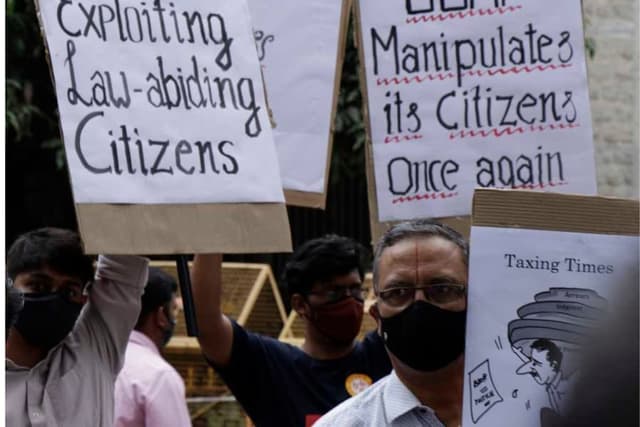
Over the last few years, BNP teams have raised two thousand issues across various wards. They've resolved more than thirteen hundred. The property tax case is illustrative: 78,000 households were slapped with what BNP considered unreasonable notices. They supported these households systematically, fought a two-and-a-half-year battle, and got those notices reversed.
In slums, BNP created Namma Arogya—doorstep preventive health checkups at Rs 200 per person, compared to Rs 2,000-3,000 at a typical hospital. "We try to assess which diseases people are prone to—heart attacks, diabetes—and prescribe preventive measures," Narasimhan explains. They've demonstrated this in three different slums, covering thousands of people.
They've helped tens of thousands of people obtain e-khatas—property records—without taking a rupee, without paying bribes, without hiring agents. "We know how the system works," Narasimhan says. "If the revenue officer is creating an issue, we engage with the special commissioner for revenues, and if required, with the chief commissioner. We escalate and sort it out."
One of his own party leaders lost her mother and applied for a death certificate. The official demanded a bribe. BNP escalated the issue. Zero bribe paid. "We don't act as agents," Narasimhan emphasizes. "We enable and facilitate people. We conduct camps to spread awareness and educate them about the system already in place and how they can use it to their advantage."
It works. But the question hangs in the air: is this politics or social work? And if you make the system work around the absence of elections, are you reducing the pressure on the government to actually hold them?
The Caste and Cash Question
When I ask about the standard critique—that cash and caste decide Indian elections, especially at the local level—Narasimhan's response is both data-driven and almost naive in its optimism.
"People who say cash and caste are decisive are usually unaware of how many votes are required to win a ward to become a corporator," he says. "All that is needed is about 4,000-5,000 votes, which is a small number in the Indian context." His calculation: in a city like Bengaluru's urban wards, about thirty percent of the population probably votes based on money and caste. "But I believe the remaining seventy percent—which is educated—will not be swayed by such things."
There's an interesting data point behind this optimism. Municipal elections typically see around forty percent voter turnout. Within this, it's usually that thirty percent—the caste-and-cash voters—who show up in large numbers. The remaining seventy percent stays home. "Our target is this seventy percent," Narasimhan says. "We want the urban middle class to come out and vote."
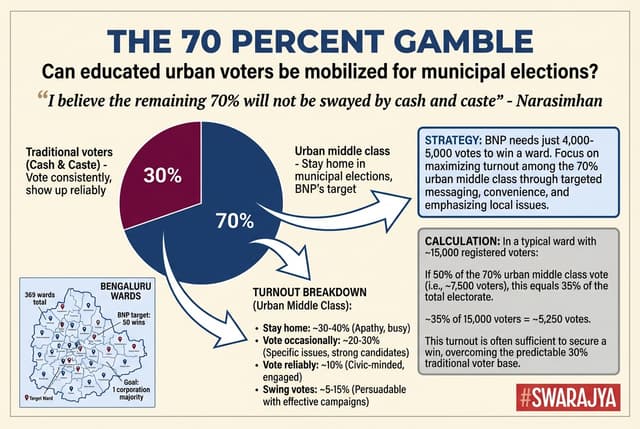
It's a theory that remains untested. And it glosses over a more uncomfortable question: BNP's founder also founded the Bangalore Apartments Federation, which represents a predominantly middle-class, apartment-dwelling constituency. The party's initiatives—BRIGHT platform access, property tax advocacy, e-khata services—all require a level of bureaucratic literacy more common in that demographic.
When pressed on how BNP ensures it represents not just apartment dwellers but migrant laborers, slum residents, and street vendors, Narasimhan points to initiatives like Namma Arogya in slums and Jana Mitra, which helps citizens access government IDs and welfare schemes. "Irrespective of caste, creed, age, or gender," he says, "people want better quality of life and better civic amenities."
It's a universalist answer to a particular question. Whether it's enough will only become clear when—if—elections actually happen.
The GBA Gambit
In September 2025, Karnataka passed the Greater Bengaluru Authority Act, replacing the BBMP with five separate corporations. On paper, it's everything BNP has asked for: smaller wards, more manageable municipal units, empowered ward committees.
But there's a catch. The GBA is chaired by the Chief Minister, effectively bringing municipal governance under direct state control. Narasimhan is circumspect but clear about what he wants instead: a Metropolitan Planning Committee as mandated by the Constitution. "The new Act has done away with many progressive provisions," he says. The Area Sabha mandate, for instance, is gone from the law.
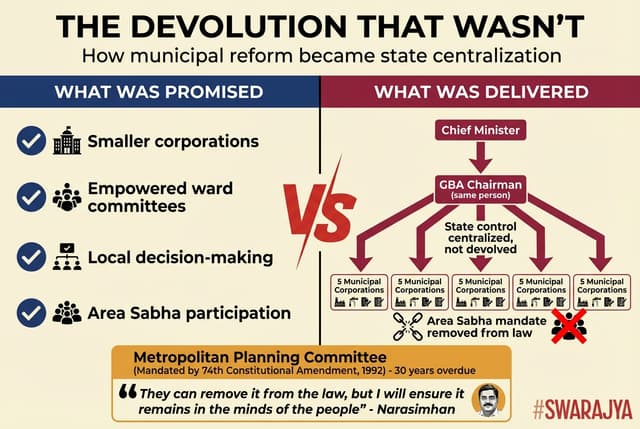
The deeper problem is structural. A Metropolitan Planning Committee—required by the 74th Constitutional Amendment for thirty years but never implemented in Bengaluru—would represent a genuine devolution of power. The GBA structure centralizes it. One is about empowering local governance; the other is about state government maintaining control while creating an appearance of reform.
When elections finally happen under this new structure—if they happen—what does winning look like for BNP? Narasimhan is specific: "Fifty out of 369 wards in the upcoming elections." More importantly, he wants a majority in at least one corporation. "This way, at a corporation level, we can demonstrate what we can deliver to the people."
Even winning one ward would be enough, he insists, to showcase BNP's model. But he also has a fallback position that reveals both the party's resilience and its peculiarity: "In case we lose, assume we don't win a single seat—we have survived six years without an election. Will we survive another term without a corporator?" He answers his own question. "My ultimate objective is good governance, and winning is only the means to the end."
The Measure of Success
Here is where BNP's story becomes genuinely interesting, not for what it achieves but for what it reveals about the possibilities and limits of institutional politics in India.
Consider the statistics: 10+ campaigns demanding systemic change, 1,300+ civic issues resolved, 15,000+ RTIs filed, Rs 21,653 crores in exposed irregularities. These are not the numbers of a traditional political party. They're the metrics of an accountability NGO that happens to be registered with the Election Commission.
And that may be precisely the point—and precisely the problem.
The pressure on Narasimhan to expand beyond municipal politics isn't just external. It comes from a basic feature of Indian political economy: municipal governments in India are weak by design. Even with the 74th Amendment, they control limited budgets, have constrained powers, and remain dependent on state governments for resources and autonomy. A party that deliberately limits itself to this level is choosing to operate in a space where even total victory yields limited leverage.
But Narasimhan has a counterargument, and it's worth taking seriously. "If career politicians are honest and transparent, they are more than welcome to join," he says. "But sadly, it is very hard to find such specimens." So he's built the party with what he calls "a new breed of politicians" who haven't yet been caught in the vicious cycle of buying votes and then indulging in corruption to buy more votes.
When I ask him directly—should BNP stay limited to municipal politics, or is there a point where that becomes a straitjacket?—he doesn't waver. "I have been very clear right from the start," he repeats. But then he adds something revealing: "Though many have told me I'm making a mistake by limiting myself."
BNP waits. Bengaluru waits.
Adithi Gurkar is a staff writer at Swarajya. She is a lawyer with an interest in the intersection of law, politics, and public policy.
 Join our