Tamil Nadu
Missed Deals And Missteps: How Tamil Nadu Is Losing The Industrial Plot To Politics
K Balakumar
Nov 24, 2025, 10:45 AM | Updated Dec 01, 2025, 11:57 AM IST
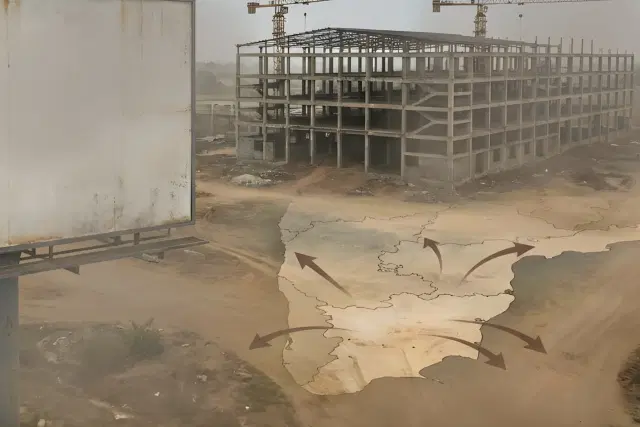
Tamil Nadu’s industrial reputation is taking a hit. And it is not because of a lack of talent or infrastructure. It is politics. In the last few months alone, the state has seen three major investment embarrassments, all tied to its Industries Minister TRB Raaja, whose penchant for PR games and vague rebuttals has turned Tamil Nadu’s industrial diplomacy into a cautionary tale.
In late August 2025, Raaja announced on his social media handles that South Korea’s Hwaseung Footwear Group would invest Rs 1,720 crore to build a large-scale non-leather footwear factory in Tuticorin, generating 20,000 direct jobs. His excitement was understandable. A marquee foreign investor, huge employment numbers, and a signal that Tamil Nadu was still very much in the game.
But just over two months later, that announcement lies in tatters.
On 14 November, media reports stated that Hwaseung is not coming to Tamil Nadu after all, and is headed instead to Kuppam in Andhra Pradesh. The switch is not trivial. Kuppam is not just any town. It is the assembly constituency of Andhra Pradesh’s chief minister N Chandrababu Naidu.
Raaja, unsurprisingly, scrambled to explain. His messaging attempted to elevate Tamil Nadu above the competition, claiming that the state was "not (in) a race to the bottom when it comes to offering unrealistic packages." He asserted that Tamil Nadu was focused on the "specific value of #JobsForTN at different areas based on the availability of different types of skills of our labour."
This lofty defence, while rhetorical, is imprecise. In the absence of transparent facts about what Tamil Nadu offered versus what Andhra Pradesh offered, the assertion that Tamil Nadu refused to race to the bottom sounds less like principled fiscal management and more like a flimsy excuse for losing a 20,000 job project. In the unforgiving plains of commerce, there is no moral high ground to climb onto. The bottom line, literally, is the deal.
The Foxconn fiasco and the pattern of denial
The Hwaseung debacle is particularly damaging because it follows a troubling pattern of exaggerated or unsubstantiated claims from the Minister’s office.
Earlier, the Industries Ministry claimed that the Taiwanese contract manufacturer Foxconn had "committed Rs 15,000 crore in investments" to create 14,000 high-value engineering jobs in Tamil Nadu. The supposed coup quickly unravelled. Foxconn issued a blunt and public denial, stating categorically that no new investments were discussed during the meeting with the Tamil Nadu government. Foxconn's statement directly contradicted Raaja's claim, confirming that no fresh discussions or agreements had been reached.
Being called out, not by a competitor but by the very company touted as the investor, highlights a deeply problematic culture of putting messaging spin ahead of verifiable facts.
But this habit of vague, implausible explanations had been demonstrated earlier too. When the big-ticket Google data centre deal went to Vizag in Andhra Pradesh, Raaja tied himself in knots by suggesting the loss was a "geopolitical and diplomatic issue." The explanation was, frankly, silly. The simple fact was that Andhra Pradesh played a better hand and won the deal.
This pattern of being caught out three times in a short period can create an environment of scepticism among the investment community. The issue is that these are not just communication blunders, but more a credibility crisis. Investors do not like that. And when a state's own minister is caught overstating or understating facts, it sends the wrong signals.
The unspoken cost of doing business
Beyond the Minister's PR gaffes, the persistent and toxic background rumour that incoming industries have to "grease the palms" of certain names close to the first family of Tamil Nadu is not helping matters. While such allegations are often unproven and remain in the domain of whispers, the public loss of three major deals (Hwaseung, Google, and the embarrassing Foxconn denial) lends an unfortunate, circumstantial credibility to the idea that the business environment in TN is complicated by non-commercial factors.
In a hyper-competitive global market, an investor looking to sink hundreds or thousands of crores into a new factory simply cannot tolerate bureaucratic risk or the potential for extra-legal costs. If Andhra Pradesh offers a cleaner, swifter, no-nonsense path, even a state with Tamil Nadu's robust infrastructure and skilled labour will be overlooked. The combination of public misinformation and private opacity is a singular disservice to the state.
AP's A-game versus TN's silly games
In this high-stakes arena, Andhra Pradesh is demonstrating a ruthless, business-focused approach. Andhra Pradesh's recent wins show that it is playing its A-game, focusing on decisive action rather than rhetorical posturing.
Tamil Nadu, meanwhile, is stuck playing silly games with vague-sounding tweets and posts. The state's fundamental attractiveness, including its high technology base, port access, and deep pool of skilled labour and management, is beyond question. However, this is gaining a bad reputation because of poor politics and the antics of people who try to be clever by half.
It is high time for Tamil Nadu to acknowledge that all states, including Karnataka, which also cried wolf over the Google deal, will try to woo investors with attractive packages. The trick is to match the offer or come up with a suitable counter-plan, not to claim a fictitious moral high ground.
There is no room for false bravado or grandstanding, especially when the outcomes are visible to all, such as industrial factories, tech parks, and thousands of jobs going elsewhere. Tamil Nadu now risks becoming a warning of how apparent political cleverness can squander real opportunity. And in the unforgiving world of industrial competition, just as in cricket, those who drop chances lose.
 Join our