Tech
The Hidden Chemistry Problem Holding Back India's Semiconductor Sovereignty
Kishan Kumar
Dec 15, 2025, 01:39 PM | Updated Dec 16, 2025, 10:50 AM IST
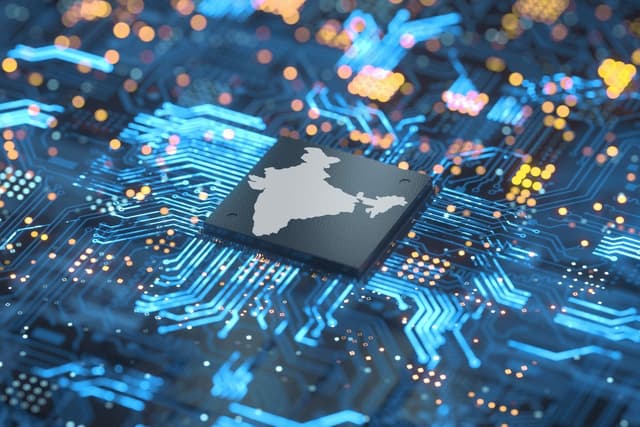
The semiconductor supply chain did not merely strain during the pandemic; it failed in ways that exposed the structural fragility beneath three decades of global integration.
For years, the world treated chip production as an inexhaustible utility, indifferent to the geographic concentration of fabrication and the brittleness built into just-in-time logistics.
When automobile plants halted over components that cost less than a cup of tea, the disruption clarified a deeper truth. Silicon, quietly and without ceremony, had become the primary infrastructure of modern life. It underwrites military capability, stabilises national grids, governs industrial automation, and forms the substrate of nearly every contemporary technology.
Countries discovered that technological dependency is not an abstract vulnerability. It is a measurable loss of agency.
India arrived at this realisation late, though not too late. The breakdown of global supply chains and the West's accelerated decoupling from China created an opening that did not exist a decade earlier.
The India Semiconductor Mission, launched in 2021 with a ₹76,000 crore corpus, signalled an institutional shift away from the assumption that scale in digital consumption could substitute for domestic production. That funding pool evaporated almost immediately, not due to miscalculation, but because semiconductor fabrication is a capital-intensive frontier where even modest ambitions require resources on the scale of national budgets.
India's early pursuit of cutting-edge nodes gave way to a more grounded assessment. Mature geometries, particularly in the 28 to 65 nanometre range, turned out to be the real engines of industrial development, supplying automotive electronics, industrial machinery, defence systems, and renewable-energy infrastructure.
Policy followed this logic. The central government adopted a flat fifty per cent support structure, while Gujarat expanded the incentive framework toward seventy per cent, making projects in Dholera and Sanand economically viable for the first time.
By 2025, the entire ISM corpus had been committed. The Tata PSMC fab accounted for nearly two-thirds of it; Micron's ATMP, Tata's OSAT, and a set of specialised ventures absorbed the rest. What remains is not an abstract funding gap, but a clear requirement.
Phase Two, estimated between ten and twenty billion dollars, is now the baseline cost of entry into semiconductor sovereignty, not an aspirational add-on.
While the fabs capture the headlines, the true test of India's ambition lies in the "invisible" upstream supply chain, the complex ecosystem of molecules, gases, and materials that keeps a fab alive. This is where the battle for sovereignty will actually be fought.
A fab is a voracious organism; it ingests hundreds of distinct chemical inputs, and if even one is contaminated by a few parts per billion, the yield crashes to zero.
Here, India faces a "Purity Paradox." The nation is a global powerhouse in industrial chemicals, exporting billions of dollars of fluorochemicals, solvents, and petrochemicals annually. Yet, it remains a net importer of the same chemicals in electronic-grade (EG) purities.
The difference between 99.9% purity (industrial grade) and 99.9999999% purity (semiconductor grade, or 9N) is not merely a decimal point; it is a chasm of engineering capability that separates a commodity from a strategic asset.


Hydrofluoric Acid (HF) serves as the prime example. It is the workhorse chemical for etching silicon. While India produces industrial HF, it has historically lacked the Grade 5 purity required for advanced logic chips. This is changing.
Tanfac Industries, a joint venture between Anupam Rasayan and the Tamil Nadu government, has successfully commissioned a 10,000 Tonnes Per Annum (TPA) plant. While initially targeting solar-grade purity, Tanfac is aggressively upgrading its distillation columns to hit the "parts-per-trillion" impurity levels required by the Dholera fab, aiming to substitute imports from Japan's Stella Chemifa and Morita.
Similarly, Gujarat Fluorochemicals (GFL) is executing a massive backwards integration strategy. They are not just refining chemicals; they are securing the mines. GFL has invested in fluorspar mines in Morocco to guarantee the raw material for its fluoropolymers.
Why? Because a fab's circulatory system cannot be built of steel, the corrosive nature of EG chemicals demands pipes, valves, and tank linings made of ultra-pure fluoropolymers like PFA and PVDF. GFL is currently undergoing qualification trials to supply these high-value infrastructure materials, attempting to break the monopoly of Western suppliers.
In the realm of solvents, Deepak Nitrite is pivoting from bulk commodities to high-value derivatives. Through its subsidiary, Deepak Chem Tech, it is investing approximately ₹3,500 crore in phenol and acetone lines at Dahej.
This is not just capacity expansion; but it is a "quality firewall." By controlling the feedstock, they aim to produce electronic-grade Isopropyl Alcohol (IPA), the essential solvent for cleaning wafers, at a purity level that global fabs can trust.
A fabric also breathes. It consumes massive quantities of ultra-pure gases, Nitrogen, Argon, and hazardous speciality gases like Silane and Nitrogen Trifluoride. If the nitrogen supply fluctuates, the oxidation furnaces fail.
Inox Air Products (INOXAP) has secured the first-mover advantage. Leveraging a contract with Tata, the company is investing ₹500 crore to build a dedicated Electronic Speciality Gas Hub in Dholera.
This facility is a strategic asset designed to de-risk the supply chain by localising the storage, mixing, and purification of 40+ speciality gases that are currently imported in cylinders. Global giant Linde India is similarly expanding, acquiring air separation units from Tata Steel to secure its foothold, bringing with it the technology for on-site cryogenic generation that guarantees 9N purity.
But moving these volatile materials requires a logistics network that India is only just building. Standard stainless steel tankers are useless for ultra-pure acids; the metal leaches into the fluid, ruining it. The industry requires ISO tanks lined with fluoropolymers.
Specialised logistics providers like Stolt Tank Containers and Aegis Logistics (via its JV with Vopak) are stepping in to build this "invisible infrastructure." They are creating the capacity to move hazardous cargoes like Silane, which ignites spontaneously on contact with air, safely from the port of Mundra to the cleanrooms of Sanand.
Water, too, is an existential constraint. A single fab drinks water at the scale of a small city. In the water-stressed flats of Gujarat, this necessitates Desalination and Zero Liquid Discharge (ZLD) systems. The Dholera project mandates that 100% of hazardous wastewater be treated.
Companies like Thermax and VA Tech WABAG are deploying advanced membrane bio-reactors and thermal evaporators to recycle up to 90 per cent of the water, ensuring that the fab's environmental footprint does not become a political liability in a drought-prone region.
While front-end fabrication is the long game, the Assembly, Testing, Marking, and Packaging (ATMP) sector is the tactical entry point. Micron Technology's facility in Sanand serves as the bellwether, though its timeline has slipped to late 2025 due to the complexities of cleanroom certification.
But a critical gap remains in the Bill of Materials. India imports nearly 100 per cent of its lead frames and bonding wires. The entry of Simmtech (a Micron supplier) in Gujarat is a start, but the ecosystem for these foundational components is dangerously thin.
However, India is also attempting to leapfrog into the future. The approval of 3D Glass Solutions in Odisha signals a bet on glass substrates, the next-generation material for AI and high-performance computing chips.
By focusing on glass, which offers superior thermal stability to organic plastics, India hopes to bypass the legacy market dominated by China and Japan. Similarly, Vedanta's acquisition of AvanStrate, a Japanese glass substrate maker, positions it to capture this emerging high-tech segment, pivoting from a failed display fab bid to a specialised materials play.
This is a strategy of "asymmetric insertion", entering the supply chain where the technology is heading, not where it has been.
Infrastructure remains the Achilles' heel. Dholera has had to integrate desalination and 50 MLD ultra-purification systems with 80 to 90 per cent recycling rates. Similarly, electricity reliability must be absolute.
The implementation of a dual-grid redundancy system, drawing power from both state and interstate transmission systems (ISTS) with instantaneous failover, is non-negotiable.
While Dholera represents the commercial future, the Semiconductor Laboratory (SCL) in Mohali represents the strategic present. With ₹4,500 crore committed to its revival, SCL is being transformed from an obsolete 180nm facility into a specialised unit for national security autonomy.
The shortlisting of Tata and Tower Semiconductor as modernisation partners demonstrates rational alignment; Tower's expertise in analogue and mixed-signal chips is essential for defence and secure communications. SCL is set to become a "teaching hospital", a place where engineers learn on real tools in real cleanrooms, addressing a talent gap that theoretical training programmes like "Chips to Startup" (C2S) cannot solve.


Tactically, the Assembly, Testing, Marking, and Packaging (ATMP) sector has become the entry gate. Micron Technology's facility in Sanand, though delayed to late 2025 due to cleanroom commissioning complexities, serves as the first major deployment.
The approval of Kaynes Semicon and CG Power proves that smaller, agile Indian players can move with a speed unachievable by global giants. The August 2025 approvals shifted the trajectory further, with SiCSem in Odisha breaking ground on Silicon Carbide sovereignty for EVs, and 3D Glass Solutions introducing RF substrate capability mandatory for 5G and 6G telecom.
Yet, the ecosystem remains fragile. The "missing oxygen" is electronic-grade chemicals and speciality gases. India imports nearly 100 per cent of its ultra-pure process chemicals, neon, krypton, arsine, and high-purity hydrogen fluoride. Without domestic purification capability, the fabs remain hostage to global supply chains.
The display fab segment has also stalled; the Vedanta-Foxconn venture died due to weak technology alignment, a logical strategic retreat in a sector with low margins and high burn rates.
But the deepest fracture is cultural. The semiconductor mission forces India to confront the flaws that have defined its industrial character: fragmented institutional responsibility, brittle bureaucracy, and a shallow R&D culture.
Manufacturing without R&D is merely assembly work masquerading as sovereignty. India owns no piece of the "total stack", not the design (US), not the process engineering (Taiwan), not the equipment (Netherlands/Japan), nor the materials (Japan).
To survive, India must demolish the wall between academia and industry. Research institutions need a "Bell Labs mindset," where funding is tied to prototypes and patents, not papers. The financial system must shift from risk avoidance to risk ownership, creating patient capital for deep-tech innovation.
Build or Be Ruled
The geopolitical context defines the urgency. The United States' CHIPS Act is bogged down in compliance red tape, while China's Big Fund III, capitalised at $47.5 billion, threatens to flood the global market with subsidised legacy chips.
If India fails to deploy tariff walls and domestic procurement mandates, its nascent fabs will bleed out against Chinese predatory pricing.
Semiconductor strategy in India is now an industrial war. It is not a development policy; it is production sovereignty replacing consumption obsession. The steel structures rising in Dholera and Sanand are the trenches of this war.
The window is narrow, and the consequences are irreversible. Silicon sovereignty is the last gate before permanent dependency. India has no exit option. Execution is survival. Delay is surrender. The country must build.
Kishan Kumar is a graduate in Economics from the University of Delhi, currently working in the political communication space. He focuses on narrative-building, strategic messaging, and public discourse, with a strong interest in politics, policy, and media. He posts on X from @FreezingHindoo.
 Join our