
Technology
ISRO Tests Uprated CE20 Cryogenic Engine At 22-Tonne Thrust For Future LVM3 Missions
Swarajya Staff
Mar 14, 2026, 05:06 PM | Updated 05:06 PM IST
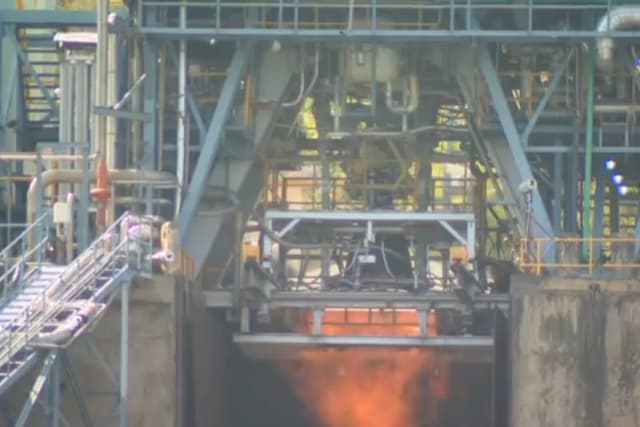
The Indian Space Research Organisation conducted a successful sea-level hot test of its CE20 cryogenic engine at 22-tonne thrust on 10 March at the ISRO Propulsion Complex in Mahendragiri, Tamil Nadu.
The engine operated for 165 seconds using a nozzle protection system and multi-element igniter, marking a significant advancement from the previous 19-tonne thrust level testing.
The test qualified the engine for future missions of the LVM3 launch vehicle, which will be operated with an uprated C32 stage to enhance payload capability.
Testing cryogenic engines at sea level presents considerable challenges due to the high area ratio nozzle, which experiences flow separation that can cause severe vibrations and thermal stress potentially damaging the nozzle structure.
The CE20 engine used in this test has undergone a record 20 hot tests, enabling the demonstration of several key technologies including indigenous turbopump bearings and sensors.
The engine showcased bootstrap mode starting without a dedicated start-up system, a vital feature for potential in-flight restarts that enhance mission flexibility for future space operations.
Union Minister Jitendra Singh congratulated ISRO today on this achievement, stating it marks another important step in strengthening India's advanced cryogenic propulsion capabilities.
The successful test clears the path for flight acceptance testing at the higher thrust level, directly supporting the LVM3 upgradation programme and India's Gaganyaan human spaceflight mission scheduled for 2027.
 Join our