World
The 1971 Moment Bangladesh Must Not Squander
Abhiram Ghadyalpatil
Feb 24, 2026, 01:40 PM | Updated 02:00 PM IST
The election results in Bangladesh are sobering in two ways. One, India's worst fears of a Jamaat-e-Islami victory have not come true. Two, Bangladesh has not totally rejected the Islamist Jamaat. Between these two balancing takeaways lies the decisive electoral win of the Bangladesh Nationalist Party (BNP).
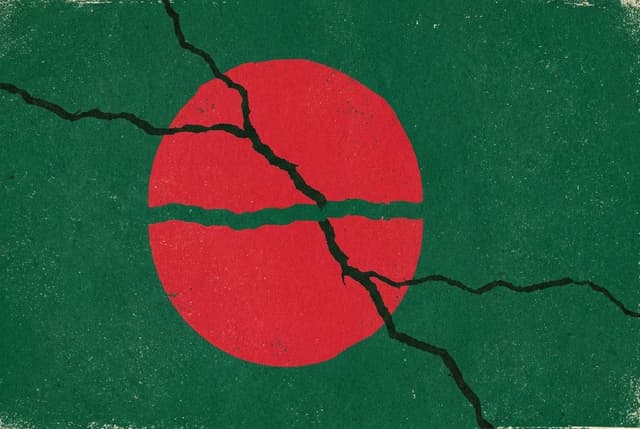
The BNP's return to power after more than two decades presents it with an epic moment in the history of Bangladesh. Epochally and symbolically, it is another 1971 moment for India's neighbour that India helped take birth. Bangladesh must not squander it, for the consequences could be even more disastrous than the post-1975 coup and the country's subsequent descent into prolonged military rule.
If BNP and Bangladesh fail to seize this moment and exploit its enormous potential to secure Bangladesh from the dangers of Islamism, there may never be an opportunity for course correction in the future. Bangladesh needs to learn from Pakistan, the country it split from but the very country it has moved dangerously close to in recent times, what losing such pivotal moments means.
India and the leading western democracies have demonstrated they appreciate the significance of this mandate in Bangladesh. Despite the fundamentally flawed nature of this election, with one major political party being banned from contesting, every other country has hailed it, with some even calling it free and fair while some, like India, avoided a direct comment on the nature of the election itself.
Prime Minister Narendra Modi was the quickest to applaud the election and congratulate his Bangladesh counterpart and Chairman of BNP, Tarique Rahman. That Modi avoided commenting on the obviously flawed nature of this election is a testament to the Indian Prime Minister's pragmatism and demonstrates that the Modi government, despite pressures from its domestic constituency, is ready to work with the BNP government.
Reciprocating the gesture Rahman made by inviting Modi to his swearing-in, the government deputed Lok Sabha Speaker Om Birla to represent India. Far from giving Bangladesh and BNP, which does not have a good history with India as compared to the Awami League, any reason to find fault with the Indian reaction, the Modi government has demonstrated it is keen to begin afresh. Bangladesh needs to appreciate the enormous amount of personal political capital Modi is investing in rebuilding the relationship despite the horrific atrocities against Hindus in Bangladesh and the manifestly anti-India position taken by both the JeI and its ally, the National Citizens' Party (NCP).
Even commentators observing Bangladesh, and not only from Bangladesh, have called it the most free and fair election in the given context. The compliments and the laudatory commentary are neither naive nor patronising. They just remind Bangladesh that it must not miss the message in this mandate: rebuild the country and make it truly democratic, as distinct from Pakistan as possible.
Speaking of Pakistan, this moment in 2026 has some stark similarities with the historic 1971 moment when East Pakistan became Bangladesh. It is safe to say the ideology and the tendencies that drove people in East Pakistan to demand an independent state are very much alive in Bangladesh today. The fact that the Jamaat has won 68 seats and a vote share of nearly 32 per cent, second only to BNP, is the demographic evidence of those tendencies being active today. Never before in its political trajectory has the Jamaat in Bangladesh won more than 20 seats.
In fact, the Jamaat-e-Islami Pakistan itself, the parent organisation of its Bangladeshi offshoot, never won more than 9 seats on its own in the general elections in Pakistan. The Islamist ideology of the Jamaat has an electoral endorsement and footprint now in the subcontinent where it was formed in 1941, and that has an ominous 1971 context.
Not only did the Jamaat-e-Islami in East Pakistan oppose the independence of Bangladesh, but it also perpetrated the most egregious violence against the Bengali population. The 1971 episode in the Jamaat's history formed the moral, legal, and political basis for the then Awami League government in 2010 setting up a special court to try those responsible for the 1971 crimes. Some Jamaat members were convicted and given death sentences. The same JeI gaining electoral traction in Bangladesh, especially in the districts bordering India, does not augur well for both Bangladesh and India.
One of the strong reasons why India, especially the Modi government, preferred to have the Awami League in power was the latter's relatively firmer control over the JeI and its anti-India rhetoric. With the AL banned and its chief and former Prime Minister Sheikh Hasina in exile in India, the Indian government was quick to acknowledge the changed political realities in Bangladesh. The onus is now on the BNP not only to reciprocate but also to keep the JeI, now electorally emboldened as well, in check.
To be sure, Prime Minister Tarique Rahman has begun well. He has assured that Bangladesh would be a safe place for people of all faiths. Mirza Fakhrul Islam, BNP Secretary General and the seniormost party position after party Chairman Rahman, has stated that the Bangladesh-India relationship would not be held captive to the extradition of Sheikh Hasina and highlighted BNP's 31-point governance agenda that includes cooperation with India in multiple sectors.
Tarique Rahman himself has been sensible and conciliatory in his post-election remarks on Bangladesh's foreign relations. It is reassuring to see Rahman not buy into the reckless rhetoric the Yunus Muhammad administration frequently deployed against India, including even his last speech before handing over the charge to the elected government.
These are early days, and it won't be an easy ride in power for the inexperienced Rahman. The JeI and its allies like NCP are reading the mandate differently. There are credible reports that the JeI sees in its 68 seats the beginning of a nationwide sweep in the future. Its historic electoral performance, especially in rural parts, could be persuasively projected as legitimising its agenda and makes it a potent force in opposition for the Rahman regime to reckon with.
The NCP, which won only 6 seats, has not diluted its "Indian hegemony" refrain, suggesting it will keep mobilising the unemployed and restless youth. The BNP, formally formed in 1978 but which also traces its political origins to the 1971 liberation like the Awami League, has its own moment in the sun now.
Tarique Rahman's father and founder of the BNP, Major Ziaur Rahman, was a leading figure in the liberation struggle, though not as legendary as Sheikh Mujibur Rahman. The BNP and the Awami League both claim ownership of the 1971 triumph and have contesting historical interpretations of that moment.
What is uncontested is that the BNP and Tarique Rahman have their moment now, almost similar to the 1971 one. They have no reason to share the present moment of glory with anyone else. They will have no one else to share the blame with if they fail this moment.
 Join our